
Whole Health for Veterans: A Comprehensive Guide
Veterans Health, Whole Health, Holistic Care, Veteran Wellness, Health Guide
What Is Whole Health for Veterans? A Plain-Language Guide
As a healthcare professional who works with Veterans, I’m often asked, “What exactly is Whole Health, and how is it different from regular medical care?” This friendly, plain-language Health Guide is designed to walk you through what Whole Health means, how it supports Veteran wellness, and how you or a Veteran you love can start using it today.
Whole Health in Plain Language: What It Really Means
Whole Health is a way of doing Veterans Health care that starts with a simple question: “What matters to you?” instead of only “What’s the matter with you?” It is a holistic care approach, which means it looks at your entire life, not just your symptoms or diagnoses. Your body, mind, relationships, sense of purpose, daily habits, and environment all play a role in your health, and Whole Health respects that reality.
In plain language, Whole Health is about putting you in the driver’s seat of your care. Your healthcare team becomes your pit crew: they bring their medical knowledge, but you bring your goals, values, and lived experience as a Veteran. Together, you build a plan that supports the kind of life you want to live, not just the conditions you’re trying to manage.
⚠️ Important Note: Whole Health does not replace medical treatment for serious conditions like heart disease, PTSD, diabetes, or cancer. It works alongside your regular care to help you feel and function better in your daily life. Always talk with your healthcare team before changing medications, stopping treatment, or starting new supplements or intense exercise programs.
Why Whole Health Matters for Veterans
Veterans often carry unique experiences that affect health: deployments, injuries, moral stress, long stretches away from family, and the shift back to civilian life. Traditional health care tends to focus on single problems—like back pain, high blood pressure, or trouble sleeping—one appointment at a time. That approach can miss the bigger picture of Veteran wellness.
Whole Health steps back and asks, “How do all of these pieces fit together for you?” For example, your back pain might be linked to old injuries, stress, poor sleep, and long hours driving for work. Instead of only giving pain medicine, a Whole Health plan might include physical therapy, movement you enjoy, stress reduction tools, better sleep habits, and support for your work schedule. Evidence from large studies shows that when people are more involved in their care and focus on lifestyle changes, they often report better quality of life, less pain, and improved mood over time.
💡 Friendly Reminder: It’s okay if you’re not sure what “wellness” looks like for you yet. Many Veterans start Whole Health simply knowing what they don’t want anymore—constant pain, feeling exhausted, or being stuck. Your care team can help you turn that into clear, realistic goals.
The Core Idea: “What Matters to You?” Comes First
A key part of Whole Health is exploring your mission, aspiration, and purpose. In everyday terms, that means asking:
What kind of life do you want to be living one year from now?
What activities, roles, or relationships matter most to you?
What do you want your health to allow you to do that you can’t do easily right now?
For one Veteran, “what matters” might be picking up my grandkids without pain. For another, it might be walking into a crowded store without feeling on edge. For someone else, it could be getting back to fishing with my buddies or sleeping through the night. These personal goals shape the rest of your Whole Health plan. They make your care feel less like a list of tasks and more like a roadmap toward the life you want.
The Circle of Health: Looking at the Whole You
The VA often uses a “Circle of Health” to explain Whole Health in simple, visual terms. Even if you never see the picture, you can understand the idea. Imagine your health as a wheel with several spokes. Each spoke is an area of your life that affects your well-being. When one spoke is weak, the whole wheel can wobble. When several are strong, you feel more steady and supported.
Common areas in this Circle include:
Working the Body: Movement, strength, balance, and flexibility in ways that fit your abilities and preferences.
Food and Drink: What, when, and how much you eat and drink, including alcohol and caffeine use.
Recharge: Sleep, rest, and recovery so your body and mind can reset.
Family, Friends, and Co-workers: Social support, connection, and a sense of belonging.
Spirit and Soul: Beliefs, values, faith, or practices that give you meaning and strength, whether religious or not.
Personal Development and Work: Purpose, hobbies, learning, and how you spend your time each day.
Surroundings: Your home, neighborhood, and the physical spaces where you live and work.
Whole Health looks at all of these areas together. This is what we mean by holistic care—care that sees you as a whole person, not just a list of medical problems. Research in public health consistently shows that social connection, sleep quality, physical activity, and a sense of purpose strongly influence long-term health outcomes, including heart health, mental health, and even survival rates.
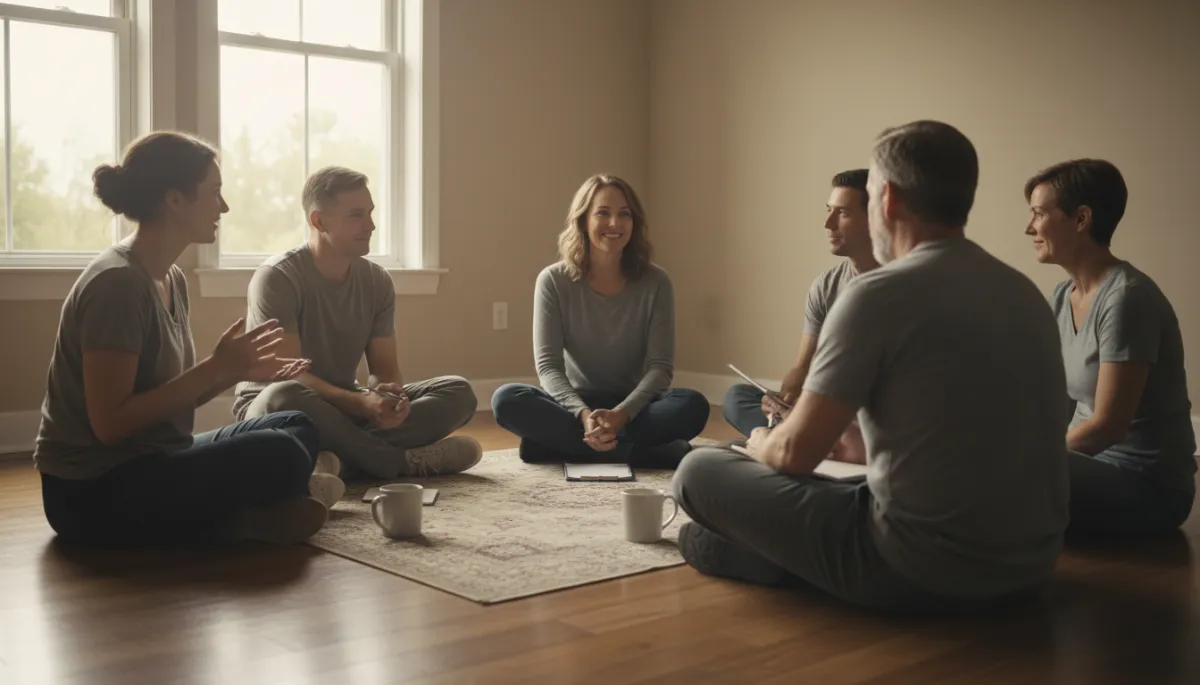
Group Whole Health sessions help Veterans learn skills and support each other’s wellness goals.
What Whole Health Care Can Include: Beyond the Usual Appointment
Whole Health still includes the basics of good Veterans Health care: primary care visits, mental health support, medications when needed, tests, and procedures. But it also opens the door to additional options that support your Veteran wellness from many angles. Depending on your location and eligibility, your Whole Health plan may include:
Health coaching: One-on-one or group sessions with a Whole Health coach who helps you set goals, stay motivated, and break big changes into small steps.
Mind-body approaches: Practices like mindfulness, relaxation breathing, guided imagery, yoga, or tai chi, which research shows can help with pain, stress, and sleep.
Movement and physical therapies: Physical therapy, exercise programs, or gentle movement classes designed with your abilities and limitations in mind.
Nutrition support: Visits with a dietitian, cooking classes, or group programs focused on healthy eating for conditions like diabetes, heart disease, or weight management.
Complementary and integrative therapies: In some settings, options like acupuncture, massage therapy, or chiropractic care may be available as part of your plan, especially for chronic pain.
⚠️ Safety Tip: Even natural or “alternative” therapies can have risks, especially if you take medications or have heart, lung, or kidney problems. Always tell your care team about any supplements, herbs, or outside treatments you use, so they can help keep you safe and avoid harmful interactions.
How Whole Health Supports Mental and Emotional Well-Being
Many Veterans live with invisible injuries—PTSD, depression, anxiety, moral injury, or grief. Whole Health does not ignore these challenges or try to “positive-think” them away. Instead, it recognizes that mental health, emotional health, and physical health are deeply connected. This is a core part of holistic care in Veterans Health.
Evidence-based therapies such as cognitive behavioral therapy (CBT), prolonged exposure, and medications remain important tools. Whole Health adds layers of support—like peer groups, mindfulness training, movement, and spiritual care—to help you build resilience and cope with stress. Studies have shown that skills like mindful breathing, for example, can calm the nervous system, lower heart rate, and reduce symptoms of anxiety when practiced regularly, even for just a few minutes a day.
🚨 If You’re in Crisis: Whole Health is not an emergency service. If you or a Veteran you know is thinking about self-harm or suicide, or is in immediate danger, please contact emergency services or a crisis line right away. In the U.S., you can dial or text 988 and press 1 for the Veterans Crisis Line, or chat online with trained responders. You do not have to face a crisis alone.
A Step-by-Step Health Guide: Getting Started With Whole Health
If you’re new to Whole Health, it can help to think of it as a simple, step-by-step process. Here is a plain-language Health Guide to help you begin:
Notice what matters most. Take a quiet moment and ask yourself: “If my health were better, what would I be doing more of?” Write down two or three answers. They don’t have to be big or impressive—they just have to be honest for you.
Look at your Circle of Health. Think about the areas we listed earlier—movement, food, sleep, relationships, purpose, surroundings. Which feel strong? Which feel off-balance? Pick one area that seems most important right now. This keeps things manageable.
Set one small, clear goal. Instead of “get in shape,” try “walk for 10 minutes, three times a week,” or “turn off screens 30 minutes before bed on weekdays.” Small, specific goals are more likely to stick and build confidence over time.
Share your goals with your care team. At your next appointment, tell your provider, “I’ve been learning about Whole Health. What matters to me is [your goal]. Can we talk about how my care can support that?” This opens the door to Whole Health conversations and resources in your local system.
Ask about Whole Health programs. Many VA facilities and community partners offer Whole Health classes, group sessions, and coaching. Ask, “Do you have any Whole Health or wellness groups, or a Whole Health coach I can talk with?”
Remember, you do not have to change everything at once. Whole Health is about steady, realistic steps in the direction of what matters most to you, with support along the way.
Real-Life Examples: How Whole Health Can Look for Different Veterans
To make this Plain-Language Guide more concrete, here are a few examples of how Whole Health can work in everyday life. Names and details are changed to protect privacy, but the situations are based on common experiences I see as a healthcare professional.
Example 1: “I Want to Play With My Grandkids Without Getting Winded”
John is a 68-year-old Army Veteran with high blood pressure, diabetes, and knee pain. His Whole Health conversation starts with what matters most: “I want to be able to get down on the floor and play with my grandkids.” His team builds a plan that includes:
A physical therapy referral to strengthen his legs and protect his knees.
A walking program starting with 5–10 minutes a day, gradually increasing.
Nutrition visits focused on simple changes to lower blood sugar and weight, like adding more vegetables and cutting back on sugary drinks.
A Whole Health group class where he learns breathing exercises to manage stress and pain flares.
Over time, John notices he can walk farther, his blood pressure improves, and he spends more active time with his grandkids. The same medications now work alongside healthier habits, rather than trying to do all the work alone.
Example 2: “I Want to Feel Less On Edge in Crowds”
Maria is a 42-year-old Marine Corps Veteran living with PTSD. She avoids grocery stores and family events because crowds make her feel jumpy and exhausted. In her Whole Health visit, she shares that her mission is to “show up for my kids’ school events without panicking.” Her Whole Health plan might include:
Continued evidence-based PTSD therapy with her mental health provider.
Learning grounding and breathing skills through a mindfulness class to calm her nervous system in stressful situations.
A gradual exposure plan for attending events, starting with smaller, shorter outings and building up.
Peer support from other Veterans who understand PTSD, reducing her sense of isolation and shame.
Maria’s Whole Health plan doesn’t erase her trauma history, but it gives her tools, structure, and community to help her move toward what matters: being present for her children in ways that feel meaningful and possible.
Example 3: “I Want to Sleep Through the Night”
Sam, a 55-year-old Navy Veteran, has chronic insomnia. He falls asleep in front of the TV, wakes up several times a night, and relies on multiple cups of coffee to get through the day. In his Whole Health visit, he says, “I just want to sleep like a normal person again.” His plan might include:
A sleep evaluation to check for conditions like sleep apnea, which are common in Veterans and treatable.
Cognitive behavioral therapy for insomnia (CBT-I), a structured, evidence-based approach that often improves sleep more effectively and safely than long-term sleep medications.
Changes in his evening routine, such as dimming lights, limiting screens before bed, and moving caffeine earlier in the day.
Relaxation techniques like body scans or gentle stretching to signal his body that it’s time to wind down.
By focusing on sleep as a key part of his Whole Health plan, Sam often finds that other areas improve too—his mood, his energy, and even his ability to manage pain and cravings.
Your Role as a Veteran: Partner, Not Passenger
One of the biggest shifts in Whole Health is how we see your role. You are not just a patient who things “happen to.” You are a partner in your care. That doesn’t mean you have to know all the medical terms or make every decision alone. It does mean your voice, your goals, and your preferences matter deeply and should guide your care plan.
As a Veteran, you are used to teamwork, training, and mission focus. Whole Health taps into those strengths. You and your care team can:
Set clear, shared goals for your health and wellness.
Review your progress together and adjust the plan when life changes.
Celebrate small wins, like walking a little farther, sleeping a bit better, or using a coping skill during a tough moment.
💬 Plain-Language Tip: If medical terms start to feel overwhelming, it’s always okay to say, “Can you explain that in simpler words?” A good Whole Health conversation should feel like a real, two-way talk, not a lecture.
How Families and Caregivers Fit Into Whole Health
Whole Health also recognizes that Veterans don’t walk this path alone. Spouses, partners, family members, and close friends often play a major role in day-to-day wellness. When you choose, your support network can be included in Whole Health planning. They might join certain visits, attend classes with you, or help you keep track of goals and appointments at home.
Research shows that when people have supportive relationships, they are more likely to stick with health changes and less likely to feel overwhelmed or alone. A simple example: walking with a friend or family member often feels easier and more enjoyable than walking alone. Whole Health makes room for those kinds of shared, realistic steps toward better Veteran wellness.
Questions to Ask Your Provider About Whole Health
To make this a truly Plain-Language Guide, here are some simple questions you can bring to your next appointment. You can even write them down and hand them to your provider if that feels easier:
“Can we talk about what matters most to me in my health right now?”
“Are there Whole Health or wellness programs here that might fit my goals?”
“Could I meet with a Whole Health coach to help me make a plan?”
“What small change do you think would make the biggest difference for me right now?”
These questions signal that you are ready to be an active partner in your care and that you are interested in a Whole Health approach to Veterans Health, not just quick fixes.
Bringing It All Together: Whole Health as a Path, Not a One-Time Visit
Whole Health for Veterans is not a single clinic or a special building. It’s a way of doing care that keeps your mission, your values, and your whole life at the center. It blends evidence-based medicine with holistic care, practical skills, and ongoing support. Most of all, it treats you as a person with strengths, not just a list of problems to solve.
In this Plain-Language Guide, we’ve explored what Whole Health is, why it matters for Veteran wellness, how it looks in real life, and how you can start using it. If there is one idea to carry with you, let it be this: Your story, your goals, and your voice belong at the heart of your care. Whole Health is one way to make sure that happens, step by step, in partnership with a team that sees the whole you.
Whether you’re dealing with chronic pain, adjusting to life after deployment, managing long-term medical conditions, or simply wanting to feel more like yourself again, Whole Health offers tools and support to help you move toward the life you want. You do not have to do it perfectly, and you do not have to do it alone. Your service mattered—and your health and well-being matter just as much.