

Guide for Veterans: Discussing Daily Limitations with VR&E
Veterans, VR&E Counseling, Disability Support, Daily Limitations
What Veterans Should Tell Their VR&E Counselor About Daily Limitations
Understanding and clearly explaining your daily limitations to your VR&E Counselor is one of the most important steps you can take toward meaningful employment and long-term stability after military service. This guide walks you through what to share, why it matters, and how to prepare for a productive counseling conversation that leads to real Disability Support and practical accommodations.
Why Your Daily Limitations Matter in VR&E Counseling
Veterans often approach Vocational Rehabilitation and Employment (VR&E) with a strong desire to return to work, start a new career, or complete a degree. At the same time, many are used to “pushing through” pain, fatigue, or emotional distress. While this mindset may have been necessary in uniform, it can work against you in a counseling setting if it prevents you from being honest about your Daily Limitations.
Your VR&E Counselor’s role is to understand how your service-connected and non-service-connected conditions affect your ability to study, work, commute, and manage everyday responsibilities. They rely on your detailed, accurate description of what daily life really looks like. Without that information, they may recommend training or a job path that is unrealistic, unsafe, or unsustainable for you in the long term. Clear communication about limitations is not complaining; it is a professional, necessary part of building an effective rehabilitation and employment plan.
📌 Key Takeaway: The more precisely you describe your limitations, the easier it is for your VR&E Counselor to match you with appropriate training, accommodations, and Disability Support services.
Preparing to Talk About Daily Limitations
Many Veterans find it difficult to put their experience into words on the spot. Preparing in advance can make your VR&E counseling sessions more focused and less stressful. Consider spending several days, or even a full week, observing and writing down how your conditions affect you throughout the day. Include both “good days” and “bad days” so your counselor gets a realistic picture, not just your best or worst moments.
Keep a brief daily log of pain levels, fatigue, mood, sleep quality, and major activities.
Note tasks that are difficult, take longer than expected, or require help from others.
Record situations that trigger pain, anxiety, panic, flashbacks, or cognitive overload.
💡 Counseling Tip: Bring your notes to your appointment. Written examples help you remember details and give your VR&E Counselor concrete information to work with.
Physical Limitations to Discuss With Your VR&E Counselor
Physical limitations can affect what type of work environment is appropriate, how long you can sit or stand, and what kind of schedule you can realistically maintain. When you talk with your VR&E Counselor, go beyond simply naming your diagnosis. Instead, explain how your body feels and functions throughout a typical day and during specific activities related to work or school.
Mobility, Standing, and Walking
If you have difficulty walking, standing in line, climbing stairs, or getting in and out of vehicles, tell your counselor exactly what you can and cannot do. Include whether you use a cane, brace, wheelchair, or other assistive device, and how far you can walk or stand before pain or fatigue sets in. This information helps determine whether you need accessible parking, a ground-floor workspace, or remote work options as part of your Disability Support plan.
Sitting, Lifting, and Repetitive Motion
Many jobs and training programs require long periods of sitting at a desk, lifting equipment or supplies, or performing repetitive tasks with the hands and arms. Explain:
How long you can sit before needing to stand, stretch, or walk.
Whether you have back, neck, or joint pain that worsens with certain positions.
How much weight you can safely lift, carry, or push without aggravating your condition.
Any numbness, tingling, or weakness in your hands that may affect typing or tool use.
Your VR&E Counselor can use this information to recommend ergonomic equipment, frequent break schedules, or career paths that minimize strain on vulnerable areas of your body.
Pain Levels and Flare-Ups
Chronic pain is one of the most common challenges Veterans face. It may vary from day to day, making it difficult to predict how you will feel at work or in class. When speaking with your VR&E Counselor, describe:
Your typical pain level on a scale of 0–10 on an average day.
How often you experience flare-ups and how long they usually last.
Activities, weather, or stressors that tend to trigger increased pain.
💡 Counseling Tip: Use specific examples, such as “After sitting for 30 minutes, my back pain rises from a 3 to a 7,” rather than general statements like “It hurts sometimes.”
Mental Health and Emotional Limitations to Share
Mental health challenges such as PTSD, depression, anxiety, and traumatic brain injury can be just as limiting as physical injuries, even if they are less visible. Many Veterans hesitate to talk about these issues, but your VR&E Counselor needs to understand them in order to recommend realistic work environments and supportive services. Honest discussion of emotional and cognitive limitations is a critical part of comprehensive Disability Support.
Concentration, Memory, and Processing Speed
If you have trouble focusing, following instructions, or remembering details, describe how this shows up in daily life. For example:
Do you lose track of tasks easily or forget appointments without reminders?
Do you need written instructions, checklists, or repeated explanations to complete complex tasks?
Does reading or working on a computer for extended periods cause headaches or mental fatigue?
Sharing these limitations allows your VR&E Counselor to suggest accommodations like extended test time, note-taking support, written instructions, or jobs that rely less on rapid information processing.
Triggers, Crowds, and Environmental Stressors
Many Veterans with PTSD or anxiety-related conditions experience difficulty in crowded spaces, loud environments, or situations that feel unpredictable. When speaking with your counselor, consider:
Do sudden noises, alarms, or shouting cause panic, anger, or flashbacks?
Do you feel overwhelmed in crowded offices, classrooms, or public transportation?
Are there specific sights, sounds, or smells that make it difficult to function?
Explaining these triggers helps your VR&E Counselor steer you away from high-stress environments, such as noisy warehouses or crowded front-line customer service roles, and toward positions or training settings that are calmer and more controlled.
Mood, Motivation, and Social Interaction
Depression, irritability, and emotional numbness can affect your ability to maintain consistent attendance, engage with coworkers, or complete tasks on time. If you experience days when getting out of bed is difficult, or if you tend to isolate yourself, tell your counselor. It is also important to mention if you struggle with anger management or feel easily provoked in tense situations. These factors influence the type of work setting and level of supervision that will be most appropriate and supportive for you.
📌 Key Takeaway: Mental health limitations are not character flaws. They are medical realities that deserve the same level of attention and accommodation as physical injuries in your VR&E plan.
Daily Routines, Energy Levels, and Sleep Patterns
Your daily routine offers valuable insight into what type of schedule you can maintain in a job or educational program. Veterans may minimize the impact of poor sleep, daytime fatigue, or medication side effects, but these details are central to effective Disability Support planning.
Sleep Quality and Nightmares
If you have difficulty falling asleep, staying asleep, or experience frequent nightmares, explain how this affects your mornings and your ability to function throughout the day. For instance, you might share that you average only four hours of sleep per night, or that you wake up multiple times due to pain or night terrors. This information can help your VR&E Counselor understand why early-morning shifts or long commutes may not be realistic for you.
Energy Fluctuations and “Crash” Periods
Many conditions, including chronic pain, traumatic brain injury, and mental health disorders, can lead to unpredictable energy levels. You may feel capable for a few hours and then suddenly become exhausted. Describe when you typically feel most alert and when you tend to crash. If you regularly need naps, quiet time, or breaks during the day, share that pattern. Doing so allows your counselor to consider flexible scheduling, part-time training, or remote work options that respect your limitations while still moving you toward your goals.
Medication Schedules and Side Effects
Many Veterans take prescribed medications that can cause drowsiness, dizziness, slowed reaction time, or difficulty concentrating. Be open about:
What time of day you take your medications.
How long side effects usually last after each dose.
Whether your medications impair driving, operating machinery, or making quick decisions.
This information guides your VR&E Counselor in identifying job roles and training formats that do not conflict with your treatment plan or put you at risk.
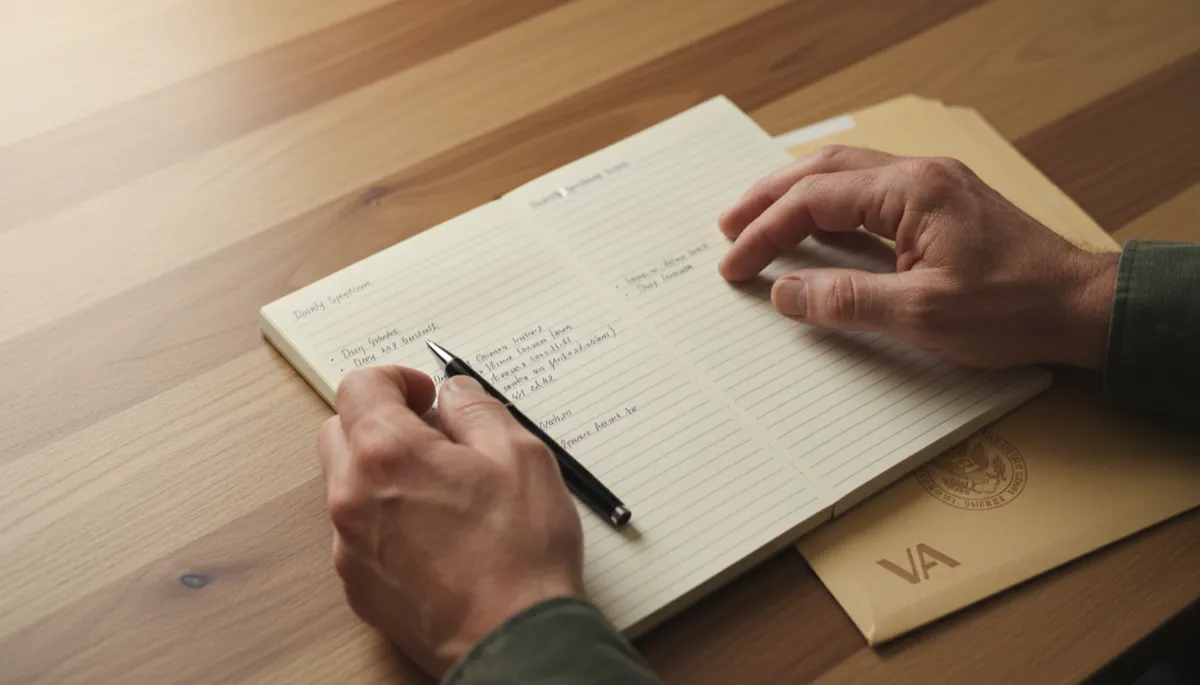
Written notes about symptoms and routines help Veterans describe daily limitations clearly and confidently.
Transportation, Commuting, and Environmental Barriers
Reliable transportation is essential for employment and education, yet many Veterans face significant barriers related to driving, public transit, and physical accessibility. Your VR&E Counselor needs a clear understanding of these obstacles in order to build a realistic plan and coordinate Disability Support resources when available.
If you cannot drive due to vision, seizure risk, medication, or anxiety, say so directly and explain the reason.
If you rely on a partner, friend, or public transit, describe how reliable that support is and any limits on distance or time of day.
If walking from a bus stop or parking lot is difficult, explain how far you can comfortably travel and whether uneven ground or stairs are a problem.
Sharing these details helps your VR&E Counselor consider training locations, remote learning, telework options, or possible transportation assistance programs that align with your situation.
Home Responsibilities and Support System
Your life does not begin and end with work or school. Responsibilities at home—such as caregiving, parenting, managing medical appointments, or dealing with housing instability—can directly impact your availability and energy for a VR&E program. Your counselor needs a full picture of your situation in order to recommend a plan that is challenging but still manageable.
If you are the primary caregiver for children, elderly parents, or a spouse with health needs, describe the time and flexibility required.
If you are dealing with unstable housing, frequent moves, or financial crisis, be open about these stressors.
If you have a strong support network—family, friends, or fellow Veterans—mention how they help you manage daily life and appointments.
These factors can influence whether full-time or part-time training is appropriate, how quickly you can progress through a program, and what additional services or referrals might be helpful.
How to Communicate Limitations Without Feeling Like You Are Complaining
Many Veterans struggle with the idea of describing their challenges in detail. They may fear being seen as weak, lazy, or ungrateful. In reality, providing accurate information is a professional responsibility in the VR&E process. You are not asking for special treatment; you are giving your counselor the data they need to do their job effectively.
💡 Counseling Tip: Think of your VR&E appointment like a mission briefing. Your job is to provide clear, factual information about your capabilities and limitations so the team can plan a successful operation.
Use neutral, factual language instead of emotional terms. For example, “I can stand for about 10 minutes before my knees start to lock up,” rather than “My knees are terrible.”
Focus on functional impact: how your condition affects tasks, schedules, and environments, not just how it feels emotionally.
Be consistent. Do not minimize your limitations in one part of the conversation and then describe extreme difficulty in another; this can create confusion and may slow down support.
Connecting Limitations to Reasonable Accommodations and Disability Support
One of the most practical reasons to share your Daily Limitations with your VR&E Counselor is to identify reasonable accommodations that can help you succeed. Accommodations are adjustments to the work or school environment that allow you to perform essential tasks without removing the core responsibilities of the role. When you describe your limitations clearly, your counselor can help you explore options such as:
Flexible scheduling, including later start times or split shifts, to account for sleep issues or medical appointments.
Ergonomic equipment such as adjustable chairs, sit-stand desks, or specialized keyboards and mice.
Quiet workspaces, private offices, or noise-canceling headphones to manage sensory overload and anxiety.
Remote or hybrid work arrangements, when consistent with job requirements and program rules.
Academic accommodations such as extra time on tests, note-taking assistance, or reduced course loads.
Your VR&E Counselor can also coordinate with other VA services, campus disability offices, and potential employers to ensure that your limitations are understood and addressed in a professional, confidential manner.
Practical Counseling Tips for a Productive VR&E Appointment
To make the most of your time with your VR&E Counselor, consider the following practical Counseling Tips tailored specifically for Veterans navigating discussions about Daily Limitations:
Arrive with Documentation: Bring copies of medical records, disability ratings, medication lists, and any functional assessments you have. These documents support your descriptions and provide a medical context for your limitations.
Use Your Daily Log: Refer to the notes you kept about pain, fatigue, triggers, and activities. This helps ensure you do not forget important details when you feel nervous or rushed.
Be Honest About Goals and Fears: Share not only what you hope to achieve (such as a certain career field) but also what you are afraid might stand in your way. Your counselor cannot address concerns they do not know about.
Ask Clarifying Questions: If you do not understand a recommendation, timeline, or requirement, ask your counselor to explain it in a different way. Clear communication is a shared responsibility.
Follow Up in Writing: After your appointment, consider sending a brief email summarizing your understanding of the plan and any remaining questions. This creates a written record and reduces the chance of misunderstandings.
Building a Collaborative Relationship With Your VR&E Counselor
The most effective VR&E experiences happen when Veterans and counselors work as partners. You bring firsthand knowledge of your Daily Limitations, strengths, and goals; your VR&E Counselor brings expertise in programs, resources, and labor market opportunities. Together, you can design a path that respects your disabilities while moving you toward meaningful employment, education, or self-employment.
Building this partnership takes trust, patience, and ongoing communication. You may not get every answer in the first meeting, and your needs may change over time. Continue updating your counselor about new diagnoses, changes in medication, improvements in your condition, or setbacks that affect your ability to participate in the plan. Adjustments are a normal and expected part of long-term Disability Support, not a sign of failure.
Conclusion: Your Voice Is Central to Your VR&E Success
As a Veteran, you have already demonstrated resilience, dedication, and the ability to operate under pressure. VR&E is an opportunity to channel those strengths into a new mission: building a sustainable future that respects both your abilities and your limitations. The foundation of that mission is clear, honest communication with your VR&E Counselor about how your conditions affect your daily life.
By preparing in advance, describing both physical and mental health challenges, explaining your routines and responsibilities, and connecting your limitations to potential accommodations, you give your counselor the information they need to provide meaningful Disability Support. In turn, you increase the likelihood of receiving a VR&E plan that fits your real-world circumstances rather than an idealized version of what you think you “should” be able to do.
Your Daily Limitations do not define your worth or your potential. They are simply factors to be acknowledged and planned around. When you share them openly and professionally with your VR&E Counselor, you take an active role in shaping your next chapter—one that honors your service while building a future that is realistic, dignified, and sustainable.
📌 Next Step: If you’d like expert help preparing for your VR&E appointment or understanding your benefits, visit PathfinderBenefits.com to explore tailored support for Veterans.