

Track Pain, Sleep & Mood for Veteran Wellness
Veterans Health, Pain Tracking, Sleep Quality, Mood Monitoring, Daily Limitations, Mental Wellness
Why Veterans Must Track Pain, Sleep, Mood, and Daily Limitations
Veterans carry more than memories of service. Many carry chronic pain, restless nights, shifting moods, and invisible limits that civilians never see. Ignoring these challenges is not strength; it is self-sabotage. Systematic tracking of pain, sleep, mood, and daily limitations is a powerful weapon Veterans can use to reclaim control, demand better care, and protect long-term mental wellness. This is not optional. It is essential.
Tracking Is Not Weakness — It Is Tactical Awareness
In the military, you tracked everything that mattered: ammo counts, fuel, coordinates, timelines, and threats. You did not “wing it” and hope for the best. You gathered data, analyzed patterns, and acted with precision. Your health deserves the same level of discipline and respect. When it comes to Veterans Health, pain tracking, sleep quality monitoring, mood monitoring, and documenting daily limitations are your recon reports on your own body and mind. Without them, you are operating blind in hostile territory: chronic pain, insomnia, anxiety, depression, and functional decline.
Doctors, therapists, and the VA can only work with the information you give them. If all you offer is “I hurt” or “I’m tired,” you hand them a foggy picture and hope they guess correctly. That is not acceptable. You deserve targeted treatment, accurate disability ratings, and real progress. Detailed tracking turns vague complaints into hard evidence. It transforms your story from “I’m struggling” into “Here is exactly how my pain, sleep, mood, and daily function have changed over the last 90 days.” That difference is massive — and it is often the difference between being dismissed and being taken seriously.
Why Veterans Must Track Pain: Stop Guessing, Start Proving
Chronic pain is one of the most common and most underestimated Veterans Health issues. Back injuries, joint damage, headaches, nerve pain, and lingering combat-related injuries can quietly dictate every decision you make — how far you walk, whether you pick up your kids, whether you can work a full shift. If you are not consistently engaging in Pain Tracking, you are leaving your future to chance and memory, and both are unreliable under stress, fatigue, and trauma.
Pain Tracking Turns “It Hurts” into Actionable Intel
Pain is not just about intensity. It has patterns, triggers, and consequences. When you track your pain daily, you capture:
Location: Back, knees, shoulders, head, or multiple areas at once.
Intensity: A clear, consistent 0–10 rating, not a vague “pretty bad.”
Triggers: Walking, lifting, weather changes, long car rides, stress, or poor sleep.
Relief: What actually helps — medication, stretching, heat, rest, or nothing at all.
This is not busywork. This is ammunition. When you walk into a medical appointment with three months of pain logs, you do not have to fight to remember details. The data speaks for you. It shows that your back pain spikes to 8/10 after standing more than 20 minutes, that your knee locks up on stairs three times a week, or that your migraines knock you out of commission twice a month. That level of clarity forces the system to pay attention.
Pain Logs Strengthen Disability Claims and Treatment Plans
The VA and other benefits systems run on documentation, not assumptions. If your pain is not documented, it might as well not exist in their eyes. Pain Tracking builds a paper trail that shows persistence, severity, and impact on your life. It backs up your words with consistent records. That can influence:
Disability ratings: Clear evidence of how pain limits work, mobility, and self-care.
Treatment adjustments: Providers can see when medications fail or therapies plateau.
Referrals: Stronger justification for physical therapy, pain specialists, or imaging.
📌 Key Takeaway: If you are not tracking your pain, it is far too easy for others to underestimate it — and far too easy for you to minimize it yourself.
Sleep Quality: The Silent Force Behind Your Energy, Mood, and Recovery
Many Veterans treat poor sleep like background noise — annoying, but “just how it is.” That mindset is dangerous. Sleep is not a luxury; it is a mission-critical resource. Sleep Quality directly shapes pain levels, mood stability, concentration, and overall mental wellness. If you are not tracking your sleep, you are ignoring one of the biggest levers you have to feel better and function stronger.
Why Veterans’ Sleep Is So Vulnerable — and Why Tracking Matters
Service often means years of disrupted sleep: night shifts, watch rotations, combat zones, and constant readiness. Many Veterans leave the military with deeply conditioned sleep patterns — light sleeping, hypervigilance, nightmares, or an inability to fall asleep without TV, alcohol, or medication. Add chronic pain, PTSD, anxiety, or depression, and sleep becomes a battlefield of its own. Tracking your Sleep Quality is how you stop guessing and start understanding what is really happening every night.
How long it takes you to fall asleep.
How many times you wake up and why (pain, nightmares, bathroom, noise).
Total hours slept — not just time in bed, but actual sleep.
How rested you feel in the morning on a simple 1–10 scale.
When you track these factors for weeks or months, patterns jump out. Maybe pain spikes at night are wrecking your rest. Maybe late caffeine, alcohol, or screen time are sabotaging your sleep. Maybe nightmares are clustering after certain triggers, like anniversaries or stressful events. Without tracking, it all blurs together into “I just don’t sleep well.” That is not good enough for serious Veterans Health care.
Sleep Logs Supercharge Mental Wellness and Treatment Decisions
Sleep is tightly connected to Mental Wellness. Poor Sleep Quality can mimic or worsen depression, anxiety, irritability, and memory problems. If your provider does not see the full picture, they might treat your mood symptoms while missing the sleep crisis underneath. When you bring detailed sleep logs to an appointment, you give them a clear view of:
Whether medications are helping or hurting your sleep.
How therapy, routine changes, or sleep hygiene strategies are working over time.
Whether a sleep study, CPAP evaluation, or PTSD-focused treatment is needed.
💡 Pro Tip: Treat your sleep like a mission. Log your bedtime, wake time, awakenings, and what you did before bed. Within a month, you will see patterns you cannot ignore.
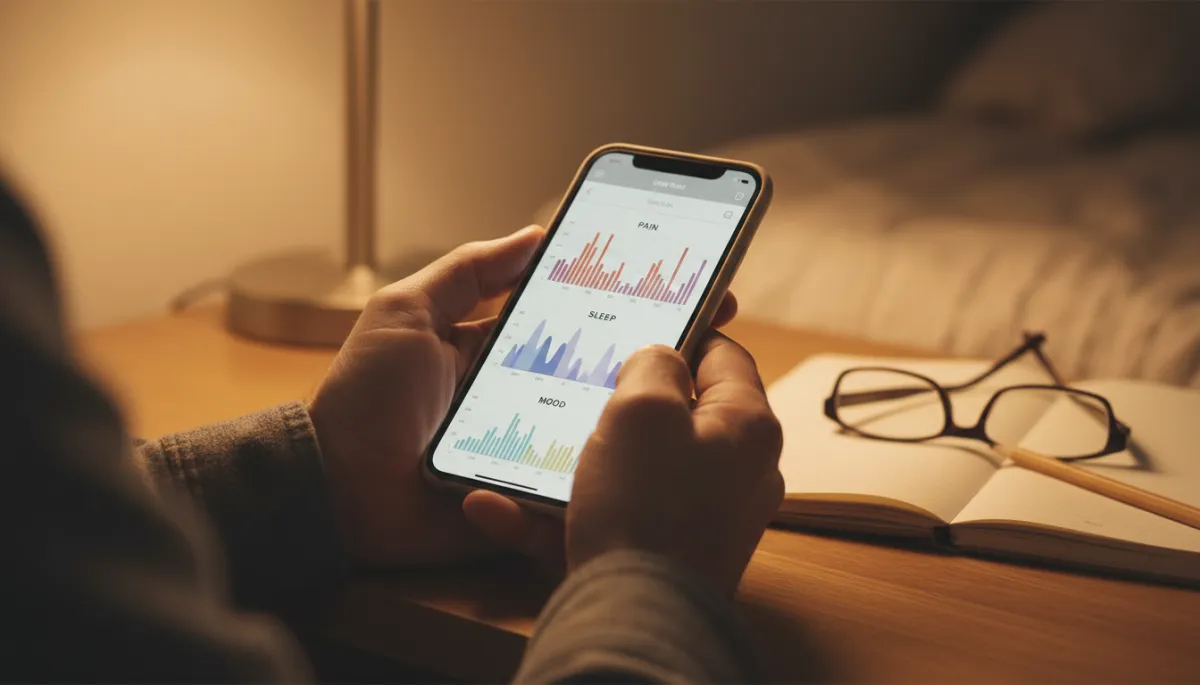
Consistent tracking turns scattered symptoms into clear patterns your providers must address.
Mood Monitoring: Catch the Slide Before It Becomes a Crash
Too many Veterans wait until they are in crisis to reach out for help. By then, mood symptoms may have already wrecked relationships, jobs, and self-confidence. Mood Monitoring is how you refuse to be ambushed by your own mind. You track your emotional terrain the same way you would scan a map for high ground and danger zones. This is not overkill; it is survival.
What Mood Monitoring Actually Looks Like
You do not need a psychology degree to track your mood. You need honesty, consistency, and a simple system. Every day — not just on the bad days — rate your mood and note key factors:
Overall mood rating: 1–10 scale, from very low to very positive.
Dominant emotions: Irritability, sadness, numbness, anxiety, guilt, or calm.
Thought patterns: Hopelessness, anger, self-blame, or feeling on edge.
Triggers: Crowds, loud noises, anniversaries, conflict, pain flares, or poor sleep.
Over time, this Mood Monitoring shows whether your mental wellness is holding steady, slowly improving, or quietly deteriorating. You might notice that your mood crashes every time your pain spikes or every time you go three nights with poor sleep. You might see that certain environments or people leave you more drained and on edge. This is not about obsessing over feelings; it is about understanding them well enough to act early and decisively.
Mood Data Gives You and Your Providers a Clear Warning System
When you track mood alongside pain and Sleep Quality, you build a powerful picture of your overall Mental Wellness. You and your providers can see:
Whether new medications or therapies are actually helping over weeks, not just days.
Early signs of depression, anxiety, or PTSD flare-ups before they explode.
How life events — job changes, family stress, anniversaries — affect your emotional stability.
📌 Key Takeaway: Mood tracking is not about complaining more; it is about catching trouble early enough to fight back effectively.
Daily Limitations: Document the Invisible Battles You Fight Every Day
One of the most brutal realities of life after service is that many Veterans quietly adjust to shrinking abilities. You stop doing certain chores. You avoid long drives. You say no to family activities. You cut your work hours or change careers. You adapt, because that is what you were trained to do. But adaptation without documentation is dangerous. It hides the true impact of your injuries and conditions — from your providers, from the VA, and sometimes even from yourself. That is where tracking Daily Limitations becomes non-negotiable.
What Are Daily Limitations — and Why Do They Matter So Much?
Daily limitations are the real-world ways your pain, sleep problems, mood changes, and other health issues restrict your life. They are not theoretical. They are brutally practical:
How far you can walk before pain forces you to stop.
How long you can stand, sit, or drive without severe discomfort or numbness.
Whether you can lift groceries, play with your kids, or do yard work independently.
How often mood or fatigue makes you cancel plans, call in sick, or withdraw from others.
When you track these Daily Limitations, you stop letting them quietly expand in the background. You see, in black and white, that what used to be a 2-mile walk is now a half-mile shuffle. You see that you are missing two workdays a month because of migraines or panic attacks. You see that you have not driven at night in six months because of anxiety or vision issues. That clarity is uncomfortable — and absolutely necessary.
Daily Limitations Are Core Evidence for Benefits and Support
Disability ratings, accommodations at work, and supportive services are not granted based on how tough you have been. They are based on how your conditions limit your ability to function day to day. Tracking your Daily Limitations provides exactly the kind of evidence decision-makers need:
Logs of missed workdays, reduced hours, or job tasks you can no longer perform.
Records of help needed with dressing, bathing, cooking, driving, or managing medications.
Documentation of physical limits (lifting, walking, standing) and cognitive limits (concentration, memory).
💡 Pro Tip: When you feel tempted to “push through” and forget about it, write it down instead. Your future self — and your benefits file — will thank you.
The Power of Connecting Pain, Sleep, Mood, and Daily Limitations
Tracking each area — pain, Sleep Quality, Mood Monitoring, and Daily Limitations — is powerful on its own. But when you track them together, patterns emerge that can completely change how you manage your Veterans Health. You stop treating each symptom like a separate enemy and start seeing the coordinated attack they are mounting on your life.
You notice your back pain spikes on days after you sleep less than five hours.
You see your mood drop sharply after three consecutive nights of nightmares.
You realize your Daily Limitations expand dramatically in weeks when your pain is uncontrolled and your sleep is fragmented.
This interconnected view lets you and your providers attack root causes instead of chasing symptoms. Maybe improving sleep reduces pain and stabilizes mood more than any pill has. Maybe better pain control unlocks your ability to move, work, and reconnect socially. Maybe targeted trauma therapy reduces nightmares, which improves sleep, which lifts your energy and mood, which shrinks your Daily Limitations. This is not wishful thinking; it is how integrated Veterans Health care is supposed to work — and your tracking data is the fuel.
How to Start Tracking Today — Without Overcomplicating It
You do not need fancy devices or complicated charts to get started. You need consistency and honesty. Begin with a simple daily log — on paper, in a notes app, or in a dedicated health tracking app. Every day, record:
Pain: 0–10 rating, location, and main trigger or relief that day.
Sleep: Hours slept, awakenings, restfulness in the morning (1–10).
Mood: Overall mood rating (1–10) plus one or two emotions you felt most.
Daily Limitations: One or two tasks you could not do or had to cut short.
That is it. No essays, no perfection. Just honest, brief entries every day. Over a month, you will have a powerful snapshot. Over three to six months, you will have a battle record of your health that no one can ignore. Bring it to every appointment. Use it when filling out forms. Review it yourself to see where you are winning and where you need reinforcements.
📌 Key Takeaway: The best tracking system is the one you will actually use. Keep it simple, keep it daily, and keep it honest.
This Is Your Health. Own the Data. Own the Story.
You have already proven that you can handle discipline, structure, and responsibility. You did it in uniform under conditions most people will never understand. Now it is time to turn that same strength inward. Tracking your pain, Sleep Quality, mood, and Daily Limitations is not about becoming a patient identity. It is about becoming the commander of your own health mission. It is about refusing to let symptoms, bureaucracy, or anyone else define your reality without evidence.
Veterans Health is too important to leave to guesswork. Pain Tracking exposes patterns and proves severity. Sleep logs reveal the hidden engine behind your energy and mental wellness. Mood Monitoring catches emotional shifts before they spiral into crisis. Tracking Daily Limitations documents the real-world impact of your conditions so you can demand the benefits, treatment, and respect you have earned. This is not extra. This is foundational.
You did not go through service to spend the rest of your life in silent struggle. Start today. Grab a notebook, open an app, or print a simple log. Tonight, record your pain, your sleep, your mood, and one limitation you faced. Tomorrow, do it again. In a week, you will see more than you see today. In a month, you will have a story backed by data. In a year, you could have a completely different level of care, support, and self-understanding — because you chose to track, not just endure.
You have already survived enough. Now it is time to do more than survive. Track fiercely. Advocate relentlessly. And claim the stronger, clearer, more supported life you deserve.
📌 Key Takeaway: Ready for support with claims, documentation, and next steps? Visit www.warriorbenefits.com to turn your tracking into real-world benefits.