
Veterans: Save, Pay Off Debt, or Invest VA Pay?
Veterans Finance, VA Disability Pay, Debt Management, Investing For Veterans, Saving Strategies, Financial Planning
Should Veterans Save, Pay Off Debt, or Invest VA Disability Pay?
VA disability pay is more than a monthly deposit—it is a lifeline that can shape the rest of a veteran’s financial life. Deciding whether to save it, use it for debt management, or start investing for the future is not a one-size-fits-all choice. This guide walks through how to think about that decision in a practical, grounded way, so you can build a financial plan that works for your real life, not just a spreadsheet.
Understanding VA Disability Pay in Your Financial Picture
Before choosing between saving, paying off debt, or investing, it helps to step back and look at what VA disability pay really represents in your overall Veterans Finance picture. VA disability compensation is generally tax-free, which means every dollar you receive is a full dollar in your pocket. That makes it powerful for financial planning, but it also means the stakes are high when deciding how to use it.
For some veterans, VA disability pay is a supplement to a civilian paycheck or military retirement. For others, it is the primary source of income. Your situation—family size, health, housing, and work status—shapes whether saving, debt management, or investing should come first. Instead of treating VA disability as “extra money,” it is more useful to see it as a key part of a long-term financial foundation that can support stability, recovery, and future goals.
📌 Key Takeaway: VA disability pay is tax-free and predictable. That combination makes it a powerful tool for building stability—but only if it is used with a clear plan.
Step One: Build a Clear Snapshot of Your Finances
It is hard to decide whether to save, pay off debt, or invest if you are not sure what your starting point looks like. A simple financial snapshot can help you see where VA disability pay fits. You do not need complicated software—just an honest list of:
Monthly income: VA disability, wages, retirement, Social Security, side work
Essential expenses: housing, utilities, food, transportation, medical costs, childcare
Debts: credit cards, personal loans, car loans, student loans, medical bills, other obligations
Current savings and investments: checking, savings, emergency fund, retirement accounts, brokerage accounts
Once you see everything on one page, patterns appear. Maybe most of your stress comes from high-interest credit card balances. Maybe you have almost no savings, which makes every car repair feel like a crisis. Or maybe your debt is manageable, but you have not started investing for long-term goals like retirement or supporting your family. This snapshot is the foundation of any serious financial planning decision about VA disability pay.
Should Veterans Save VA Disability Pay First?
Saving might not feel exciting, but for many veterans, it is the most important first move. An emergency fund is the buffer between you and financial chaos. Without savings, a blown tire, a missed paycheck, or a medical bill can push you right back into high-interest debt. That is why many financial professionals suggest building at least a small emergency cushion before focusing heavily on investing or extra debt payments.
How Much Should You Save?
A common guideline is to aim for three to six months of essential expenses in a separate savings account. For some veterans—especially those with unstable work, chronic health conditions, or dependents—a larger cushion may feel more comfortable. For others, that target may feel impossible at first. In that case, start smaller. Even $500 to $1,000 set aside can turn a crisis into an inconvenience instead of a disaster.
VA disability pay can be a steady base for these saving strategies. Because it is predictable, you can decide that a specific portion—say, $50, $100, or more each month—goes directly into savings before you spend anything else. Automating this transfer with your bank turns saving into a habit instead of a decision you have to remake every month.
💡 Pro Tip: Use a separate savings account at a different bank or credit union for your emergency fund. The small barrier to access can help you think twice before dipping into it for non-emergencies.
When Saving Takes Priority Over Debt or Investing
Saving VA disability pay often makes the most sense when:
You have little or no emergency fund (less than one month of expenses).
Your income is uncertain, seasonal, or heavily dependent on overtime or gig work.
You or a family member has health issues that could lead to sudden expenses or time away from work.
You are just starting to get organized with Veterans Finance and need breathing room before tackling bigger goals.
In these situations, saving is less about “missing out” on investment returns and more about buying stability. Once that stability is in place, it becomes much easier to make confident decisions about debt management and investing for veterans.
Should Veterans Use VA Disability Pay to Pay Off Debt?
Debt can feel like a shadow that follows you everywhere—especially high-interest credit card balances, payday loans, or old bills that never seem to shrink. Using VA disability pay for debt management can be one of the fastest ways to reduce financial stress and free up money for future goals. But not all debt is equal, and not every situation calls for the same approach.
Understanding “Good” Debt vs. “Toxic” Debt
Some debt helps you move forward—like a reasonable mortgage, a low-interest car loan you can comfortably afford, or federal student loans with flexible repayment options. Other debt drags you backward—especially credit cards with high interest rates, old collections, or loans with aggressive fees and penalties. When deciding how to use VA disability pay, it often makes sense to attack the most toxic debt first.
Look closely at interest rates. If a credit card is charging 20% interest, paying it down is like earning a guaranteed 20% return on your money, because you avoid that cost in the future. It is very hard to find an investment that reliably beats that kind of rate without taking serious risk. That is why many veterans choose to use extra funds from disability compensation to make larger payments on high-interest debt once a basic emergency fund is in place.
Debt Payoff Strategies That Work Well with VA Disability Pay
Two popular approaches to debt management are the “debt snowball” and the “debt avalanche.” Both can be powered by setting aside a portion of your VA disability pay each month for extra payments.
Debt snowball: You pay extra toward the smallest balance first while making minimum payments on others. Once that debt is gone, you roll its payment into the next smallest debt. This method builds momentum and motivation as you see quick wins.
Debt avalanche: You focus extra payments on the debt with the highest interest rate, regardless of balance. This method usually saves more money in interest over time, even if the early wins are slower.
There is no single “correct” method. The best choice is the one you are most likely to stick with. VA disability pay, being steady, can form the backbone of those extra payments. Even $50 or $100 a month consistently directed at one debt can shorten payoff time dramatically.
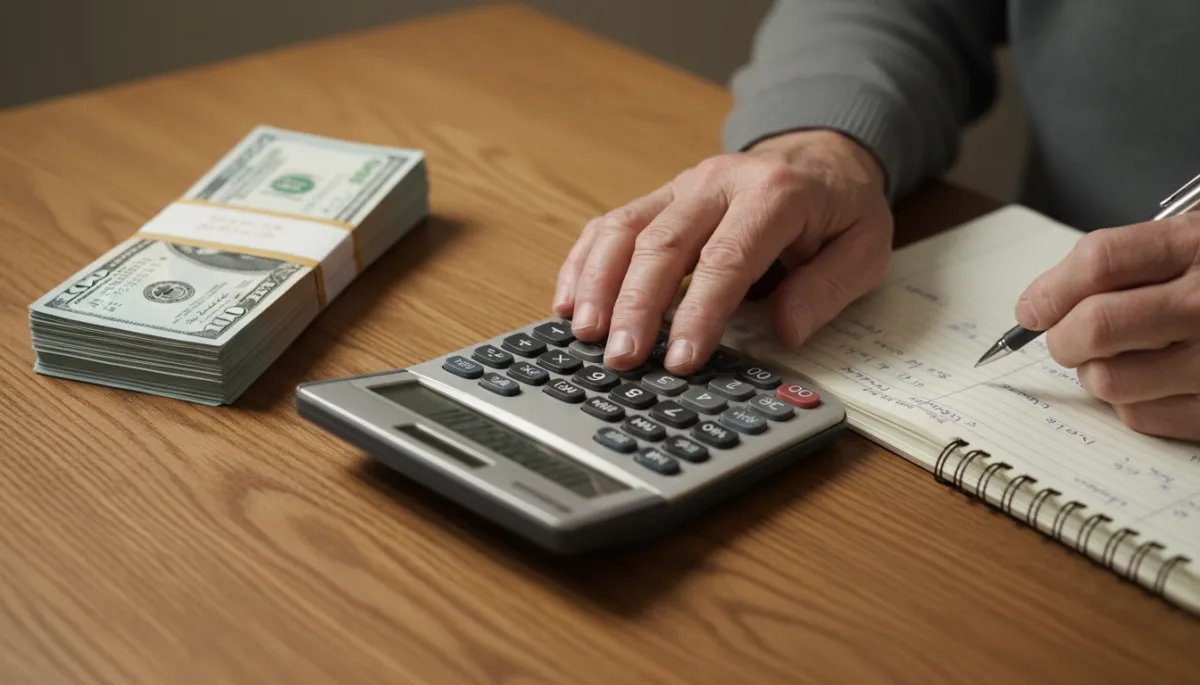
A simple written plan can turn scattered bills into a clear payoff strategy.
⚠️ Warning: If you are behind on essential bills like rent, utilities, or child support, catch up on those first. Keeping a roof over your head and maintaining critical services usually comes before extra debt payments or investing.
When Paying Off Debt Should Be the Priority
Using VA disability pay to aggressively tackle debt often makes sense when:
You already have at least one month of essential expenses saved and are working toward more.
You are carrying high-interest credit card debt or personal loans that feel unmanageable.
Debt payments are eating up a large portion of your monthly income, leaving little room for saving or investing.
The stress from debt is affecting your sleep, relationships, or mental health.
In these cases, directing VA disability pay toward debt management can be an investment in your quality of life. Once the debt is gone or much smaller, you can redirect that monthly cash flow toward saving strategies and investing for veterans without feeling constantly squeezed.
Should Veterans Invest VA Disability Pay?
Investing is where your money has the chance to grow over time, instead of just sitting in a bank account or going toward today’s bills. For veterans who have some savings and manageable debt, investing VA disability pay can be a powerful way to build long-term security. However, investing always involves risk, and it works best when built on a stable foundation rather than used as a shortcut to “fix” deeper financial problems.
Investing for Veterans: Where to Start
For many individuals, investing begins with retirement accounts. If you have access to an employer-sponsored plan, such as a 401(k) or 403(b), contributing there can make sense—especially if your employer matches part of your contribution. That match is essentially free money. You can think of it as an immediate return on your investment before the market even comes into play.
If you do not have a workplace plan, you can open an Individual Retirement Account (IRA) with many banks or investment companies. Some veterans also use regular brokerage accounts for more flexible, non-retirement investing. The key is to understand your time horizon—how long until you may need this money—and your comfort with risk. Money you might need in the next one to three years usually does not belong in volatile investments like stocks, because the market can swing sharply in the short term.
How VA Disability Pay Can Support Long-Term Investing
One advantage of VA disability pay is that it tends to be steady even when your job situation changes. That consistency can make it easier to invest a small, regular amount each month. Over time, those contributions can add up through the power of compounding—where your investments can earn returns, and then those returns can potentially earn more returns.
For example, setting aside $100 a month of disability compensation into a diversified investment portfolio for 20 or 30 years can grow into a meaningful sum, even with modest average returns. The goal is not to “get rich quick,” but to give your future self more options: retiring earlier, helping children or grandchildren, covering medical needs, or simply reducing money stress later in life.
📌 Key Takeaway: Investing works best when it is boring, consistent, and long term. Using a portion of VA disability pay for steady monthly contributions often beats trying to time the market or chase hot tips.
When Investing Should Take a Back Seat
Even though investing is important, it is not always the first move. You may want to hold off on investing VA disability pay if:
You have no emergency savings and are living paycheck to paycheck.
You are behind on essential bills or at risk of eviction, utility shutoffs, or legal action.
You are carrying very high-interest debt that is costing you more than a reasonable investment is likely to earn.
You feel tempted to use investing as a way to “gamble” your way out of financial trouble.
In these cases, it is usually more effective—and safer—to focus on saving and debt management first. Once those pieces are in place, investing becomes a way to build on your progress, not a risky attempt to fix underlying problems.
Balancing Saving, Debt Payoff, and Investing: A Practical Framework
The real question is not just “Should veterans save, pay off debt, or invest VA disability pay?” It is often, “How do I balance all three in a way that fits my life?” There is no universal formula, but a simple framework can help you decide where each dollar should go.
Phase 1: Stabilize
In the stabilization phase, the focus is on getting out of immediate danger. VA disability pay in this phase might be used to:
Catch up on essential bills and avoid shutoffs, evictions, or legal trouble.
Build a starter emergency fund of at least $500–$1,000.
Stop taking on new high-interest debt whenever possible.
In this phase, investing usually takes a back seat. The priority is creating enough breathing room that a single setback does not undo your progress.
Phase 2: Strengthen
Once basic stability is in place, the next phase is strengthening your overall position. Here, you might divide your VA disability pay among several goals, such as:
Growing your emergency fund toward three to six months of essential expenses.
Making extra payments on high-interest debt to accelerate payoff.
Starting small, consistent contributions to retirement or other long-term investments.
In this phase, you might choose a simple split—for example, 40% of your “extra” funds from disability pay to savings, 40% to debt management, and 20% to investing. The exact numbers are less important than having a plan you can stick with over time.
Phase 3: Grow
In the growth phase, your emergency fund is strong, your high-interest debt is gone or very small, and your monthly cash flow feels more comfortable. Now, investing for veterans can move closer to center stage. VA disability pay in this phase might be used to:
Increase retirement contributions to take full advantage of tax benefits and potential employer matches.
Fund long-term goals like education savings, future housing upgrades, or starting a business.
Maintain, rather than build, your emergency fund, topping it off as needed.
This is where the long-term power of consistent investing can really show up. Your disability compensation becomes not just monthly support, but fuel for a more secure future.
Personal Factors That Shape the Best Choice for You
While frameworks and guidelines are helpful, your situation is unique. When deciding how to use VA disability pay, consider these personal factors as part of your financial planning process:
Health and ability to work: If your ability to earn income may change over time, a larger emergency fund and more conservative investing might feel appropriate.
Family responsibilities: Dependents, aging parents, or shared custody arrangements can affect how much risk you are comfortable taking and how much flexibility you need in your budget.
Age and time horizon: Younger veterans typically have more time for investments to recover from market swings, while those closer to retirement may prioritize stability and debt reduction.
Stress tolerance: Some people sleep better knowing they have zero debt. Others feel more secure watching their investment accounts grow. Your emotional response matters as much as the math.
Veterans Finance is not just about numbers; it is about aligning your money with the life you want to live after service. The “right” answer is the one that supports your well-being, your relationships, and your long-term sense of control over your financial life.
Getting Support: You Do Not Have to Figure This Out Alone
If this all feels like a lot to juggle, you are not alone. Many veterans were never taught the basics of saving strategies, debt management, or investing, yet are expected to make complex decisions about VA disability pay on their own. Reaching out for guidance can turn confusion into a clear, step-by-step plan.
Some options to explore include:
Nonprofit credit counseling agencies that help with budgeting and debt payoff plans, often at low or no cost.
Financial planners who have experience working with veterans and understand how VA benefits interact with other income sources.
Veteran service organizations that offer workshops or one-on-one support around money management and benefits.
💡 Pro Tip: When seeking advice, ask whether the person is paid to sell specific financial products. A fee-only planner or nonprofit counselor is often better aligned with your long-term interests.
Bringing It All Together: A Thoughtful Use of VA Disability Pay
VA disability compensation is recognition of your service and sacrifice. Treating it as a tool for long-term stability and growth—rather than just extra spending money—can change the trajectory of your financial life. Whether you prioritize saving, paying off debt, or investing, the most important step is to act with intention instead of habit or impulse.
For many veterans, a balanced approach works best:
Start by building a basic emergency fund so that life’s surprises do not send you back into debt.
Use part of your VA disability pay to tackle high-interest debt that is draining your monthly budget and peace of mind.
As your situation stabilizes, begin investing steadily for long-term goals, even if the amounts are small at first.
Over time, these small, steady decisions can add up to something powerful: less stress, more options, and a future that feels less uncertain. Your service required discipline, patience, and resilience. Those same qualities can guide your approach to Veterans Finance, helping you use VA disability pay in a way that honors both your past and your future.
Whether you are just starting to receive benefits or have been getting them for years, today is a good day to pause and ask: “What do I want this money to do for me?” From there, you can choose a path—saving, paying off debt, investing, or a mix of all three—that supports the life you are working to build after service.
📌 Ready for a Personalized Plan? If you want one-on-one support to turn these ideas into a clear, step-by-step strategy for your situation, you can explore financial coaching tailored for veterans at https://sh-anna-lytics.com/financial-coaching.