
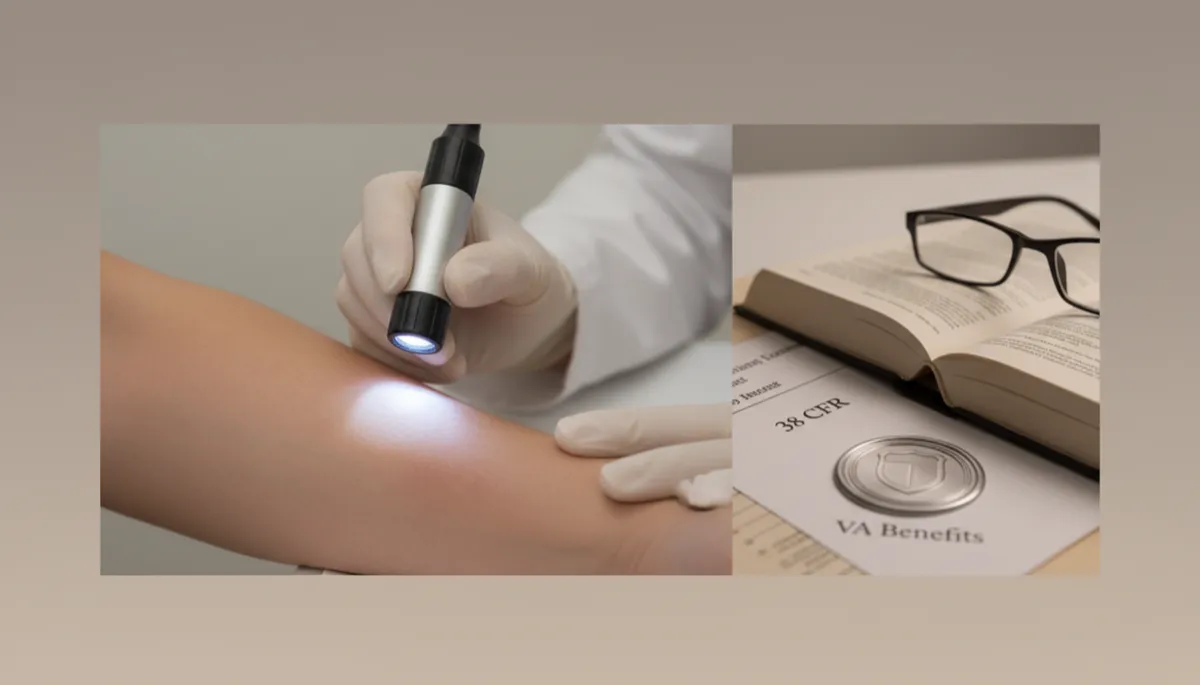
VA Disability: Evaluating Skin Conditions
Veterans Law, Skin Conditions, 38 CFR Evaluation, VA Benefits
How Skin Conditions Are Evaluated Under 38 CFR for VA Disability Benefits
Understanding how the Department of Veterans Affairs (VA) evaluates skin conditions under Title 38 of the Code of Federal Regulations (38 CFR) is essential for any veteran seeking fair disability compensation. This guide explains how skin diseases are assessed, what evidence matters most, and how 38 CFR Evaluation rules influence your Veteran Health and VA Benefits outcomes.
Why Skin Conditions Matter in VA Disability Assessment
Skin conditions are among the most common issues reported by veterans. From rashes related to field exposure, to chronic fungal infections, to scars from burns or combat injuries, these conditions can significantly affect daily life. Under the VA system, skin diseases are not evaluated only by how they look. Instead, the Disability Assessment process considers how the condition impacts your overall Veteran Health, daily functioning, and ability to work.
The VA uses the Schedule for Rating Disabilities, contained in 38 CFR Part 4, to assign disability percentages. Within that schedule, skin disorders are grouped under specific diagnostic codes. Each code includes skin disease criteria that outline how to measure severity and determine the appropriate rating level. Understanding these criteria can help you present stronger evidence and better navigate your claim or appeal.
Overview of How 38 CFR Evaluation Works for Skin Disorders
Under 38 CFR, skin conditions are evaluated using a combination of factors, including the percentage of body or exposed areas affected, the type and duration of treatment, and the presence of scarring or disfigurement. The VA’s goal is to assign a rating that reflects the average impairment in earning capacity caused by the condition. Ratings usually range from 0 percent (service-connected but noncompensable) to as high as 60 or 80 percent for the most severe manifestations, depending on the diagnostic code.
📌 Key Takeaway: The 38 CFR Evaluation for skin conditions focuses on measurable criteria—such as body surface area, treatment type, and functional impact—rather than subjective descriptions alone.
Common Service-Connected Skin Conditions in Veterans
Many different diagnoses fall under the broad category of skin conditions. While every case is unique, some issues appear frequently in VA claims because of the environments and exposures associated with military service. Common examples include:
Dermatitis and eczema: Chronic rashes, itching, and inflammation that may worsen with heat, sweat, or irritants encountered during service.
Psoriasis: An autoimmune condition causing thick, scaly patches that can crack, bleed, and cause significant discomfort and social stigma.
Acne and chloracne: Severe forms of acne, sometimes linked to chemical or environmental exposures, that may leave permanent scarring.
Fungal infections: Athlete’s foot, jock itch, and other persistent infections made worse by prolonged boot wear, humidity, and limited hygiene in the field.
Urticaria (hives): Recurrent episodes of raised, itchy welts, sometimes triggered by stress, medications, or allergens encountered during service.
Scars and disfigurement: Resulting from burns, shrapnel, surgery, or other trauma, which may affect appearance, movement, or sensation.
Each of these conditions has specific diagnostic codes and rating criteria under 38 CFR. However, the general principles of Disability Assessment for skin disease remain consistent: the VA looks at extent, severity, frequency, and impact.
Key Skin Disease Criteria Used in 38 CFR Evaluation
While each diagnostic code has its own language, several core skin disease criteria appear repeatedly in the regulations. Understanding these can help you interpret your rating decision and prepare medical evidence that aligns with the law.
1. Percentage of Body and Exposed Areas Affected
Many skin conditions are rated based on how much of your body is involved. 38 CFR often distinguishes between:
Total body surface area affected (for example, less than 5%, 5–20%, or more than 40%).
Exposed areas such as the face, neck, hands, and arms, which are more visible and may carry greater social and occupational impact.
During a Compensation & Pension (C&P) examination, the examiner should estimate these percentages. This is a crucial part of the Disability Assessment, and an inaccurate estimate can lead to an incorrect rating. If you believe the percentage was underestimated, discussing this with your representative or providing additional medical evidence may be important.
2. Type and Duration of Treatment Required
Another central factor in 38 CFR Evaluation for skin conditions is the treatment regimen. The regulations often distinguish between:
Topical therapy: Creams, ointments, or lotions applied directly to the skin.
Systemic therapy: Oral or injected medications, such as corticosteroids, immunosuppressive drugs, or biologics, that affect the body as a whole.
The duration of treatment over a 12-month period is also important. For example, some rating levels require evidence that systemic therapy was needed for a certain number of weeks per year. Keeping accurate records of prescriptions and treatment dates directly supports your Veteran Health history and strengthens your case for appropriate VA Benefits.
3. Frequency and Severity of Flares
Many skin conditions are not constant. They flare up, then improve, sometimes leaving little visible evidence between episodes. 38 CFR acknowledges this by allowing ratings based on the frequency, duration, and severity of flares. If your condition is typically worse in hot weather, under stress, or with certain exposures, that pattern should be documented in your medical records and clearly described during examinations.
💡 Pro Tip: Photographs taken during flare-ups, along with detailed notes about triggers and symptoms, can be powerful evidence in a 38 CFR Evaluation for intermittent skin conditions.
4. Functional Impact and Quality of Life
Although the rating schedule is structured around measurable criteria, the VA must also consider how a skin condition affects your daily functioning. For example, severe itching may interfere with sleep, while painful fissures on the hands or feet can limit manual tasks or prolonged standing. Visible lesions on the face or neck may cause social withdrawal, anxiety, or depression, which can impact employment and relationships. All of these factors are part of a comprehensive Disability Assessment under 38 CFR.

Close-up of a veteran’s hands with visible but non-graphic eczema being examined by a clinician...
Thorough documentation of visible symptoms and daily impact can significantly influence VA skin ratings.
How the VA Conducts Disability Assessment for Skin Conditions
When you file a claim for a skin disorder, the VA follows a structured process to evaluate whether the condition is service-connected and, if so, what rating is appropriate. This process combines the legal framework of 38 CFR with medical evidence and clinical judgment.
Step 1: Establishing Service Connection
Before a rating can be assigned, the VA must determine whether your skin condition is related to your military service. This typically requires three elements:
A current diagnosis of a skin condition, documented by a qualified medical professional.
Evidence of an event, injury, exposure, or symptoms during service (for example, treatment for rashes, burns, or infections while deployed).
A medical nexus linking the current diagnosis to your in-service event or exposure.
Once service connection is established, the focus shifts to applying the appropriate diagnostic code and rating criteria under the 38 CFR Evaluation framework.
Step 2: The Compensation & Pension Examination
Most skin claims involve a C&P examination. During this appointment, a VA or contracted clinician reviews your medical history, examines your skin, and documents findings using a standardized Disability Benefits Questionnaire (DBQ). The examiner should:
Identify the type of skin condition(s) present and their locations.
Estimate the percentage of total and exposed body areas affected.
Record the type and duration of treatments over the past 12 months, including systemic medications.
Note any functional limitations, such as difficulty with work tasks, self-care, or mobility.
Your participation is crucial. Provide clear, honest descriptions of your symptoms, including how they vary over time. If your condition is currently in a mild phase, mention how it looks and feels during a severe flare. This helps ensure that the Disability Assessment reflects the full picture of your Veteran Health, not just what the examiner happens to see that day.
Step 3: Applying 38 CFR Diagnostic Codes and Rating Levels
After the examination, a VA rating specialist reviews the medical evidence and applies the relevant diagnostic code from 38 CFR Part 4. For example, dermatitis and eczema are typically rated under a specific code that uses body surface area and treatment type as primary criteria. Psoriasis may be evaluated similarly, while scars and disfigurement of the head, face, or neck have their own detailed rating schedule, including characteristics such as tissue loss, asymmetry, and texture changes.
In some cases, multiple codes may be considered. However, the VA avoids “pyramiding,” which means rating the same symptoms under more than one code. Instead, the specialist selects the code or combination of codes that best reflects the overall disability picture, consistent with the Skin Disease Criteria outlined in 38 CFR.
How Skin Ratings Affect VA Benefits and Overall Veteran Health Support
The disability percentage assigned to your skin condition directly influences the level of VA Benefits you receive. Higher ratings generally result in increased monthly compensation and may open the door to additional resources, such as health care priority groups, vocational rehabilitation, and housing or clothing allowances in specific circumstances.
Importantly, skin conditions rarely exist in isolation. Chronic discomfort, visible scarring, or long-term steroid use can contribute to other health challenges, including mental health conditions, metabolic issues, or sleep disturbances. When evaluating Veteran Health holistically, it is essential to consider whether secondary conditions should also be claimed and evaluated under 38 CFR. For instance, depression related to disfiguring facial scars or anxiety tied to visible psoriasis may warrant separate but related disability claims.
📌 Key Takeaway: A well-documented skin condition can be the foundation for additional service-connected ratings when it leads to secondary physical or mental health disorders.
Strengthening Your Claim: Practical Steps for Veterans with Skin Conditions
While the 38 CFR Evaluation process is structured and legalistic, there are concrete actions you can take to present the strongest possible claim. These steps help ensure that the Disability Assessment accurately reflects the reality of your condition and its impact on your life.
Maintain Consistent Medical Treatment and Documentation
Regularly seeing a dermatologist or primary care provider for your skin condition serves two purposes: it supports your health and creates a clear medical record. Treatment notes, prescription histories, and specialist consultations become vital evidence when the VA reviews your file. Gaps in care can make it harder to prove that your condition is chronic or severe enough to warrant higher ratings.
Document Flares and Daily Impact in Detail
Because many skin conditions are cyclical, personal documentation can fill in the gaps between medical visits. Consider keeping a symptom diary that notes:
Dates and duration of flare-ups.
Triggers such as weather, stress, or specific tasks at work.
Symptoms, including itching, burning, pain, or cracking of the skin.
Any missed workdays, limited activities, or social events avoided because of your condition.
This information not only supports your claim but also helps clinicians and examiners understand the real-world impact of your skin disease, aligning your experiences with the Skin Disease Criteria in 38 CFR.
Use Photographs as Supporting Evidence
Clear, date-stamped photographs taken during flares can be extremely persuasive, especially when your condition fluctuates. Images of exposed areas—such as the face, neck, and hands—may be particularly relevant because of how 38 CFR Evaluation emphasizes exposed body surface area. When possible, include these photos in submissions to the VA and show them to your treating providers so they can comment on them in your medical records.
Consider Professional Representation
Veterans service organizations (VSOs), accredited attorneys, and claims agents are familiar with the legal language of 38 CFR and the nuances of Disability Assessment. They can help identify whether your condition is being evaluated under the most appropriate diagnostic code, whether secondary conditions should be claimed, and whether an appeal is warranted if you receive a lower rating than expected. Professional guidance can be especially valuable when complex skin conditions interact with other aspects of Veteran Health.
Appealing a Skin Condition Rating Under 38 CFR
Even when you provide strong evidence, your initial rating decision may not fully reflect the severity of your skin condition. If you believe your 38 CFR Evaluation was incorrect, you have the right to seek review through the VA appeals process. This may involve submitting a supplemental claim with new and relevant evidence, requesting a higher-level review, or appealing directly to the Board of Veterans’ Appeals.
In an appeal, detailed medical opinions from dermatologists, updated photographs, and statements from family members or coworkers about the condition’s impact can be particularly persuasive. The goal is to demonstrate, in terms that align with the Skin Disease Criteria, why a higher rating is justified. Appeals can be lengthy, but they are a vital tool for securing the level of VA Benefits that accurately reflects your disability.
Integrating Skin Condition Care into Your Overall Veteran Health Plan
While disability ratings and compensation are important, they are only part of the picture. Long-term management of skin conditions is essential for maintaining quality of life. VA health care offers access to dermatology services, medications, and in some cases, specialty treatments such as phototherapy or biologic injections. Engaging actively with these resources supports both your health and your ongoing documentation under 38 CFR Evaluation standards.
Skin health is closely connected to mental and emotional well-being. Persistent itching, pain, or visible lesions can lead to frustration, embarrassment, and social withdrawal. If you notice changes in your mood or functioning related to your skin condition, discuss them with your providers. Addressing these concerns early may improve your overall Veteran Health and also ensure that any secondary conditions are appropriately evaluated for VA Benefits purposes.
Conclusion: Navigating Skin Condition Ratings Under 38 CFR with Confidence
Skin conditions may sometimes be dismissed as “just cosmetic,” but under the VA system, they are recognized as legitimate disabilities when they interfere with health, work, or daily life. The 38 CFR Evaluation framework provides detailed Skin Disease Criteria that guide how these conditions are rated, from the percentage of body area involved to the intensity of treatment required and the functional limitations they create. Understanding these rules empowers you to participate actively in your Disability Assessment and advocate for yourself more effectively.
By maintaining consistent medical care, documenting flares and their impact, using photographs strategically, and seeking professional assistance when needed, you can strengthen your claim and ensure that your VA Benefits accurately reflect your level of impairment. Most importantly, recognize that caring for your skin condition is a vital part of caring for your overall Veteran Health. With the right information and support, you can navigate the 38 CFR Evaluation process with greater clarity and confidence, securing both the treatment and the compensation you have earned through your service.
📞 Ready for one-on-one support? To explore personalized help with your VA skin condition claim or overall Veteran Health plan, visit www.valorhealth.net to learn more and get connected with support.