

Understanding VA Claims for Sleep Apnea
Veterans, Sleep Apnea, VA Disability Benefits
Why Is Sleep Apnea So Hard to Connect in VA Claims?
Many veterans are surprised to learn that winning a VA disability claim for Sleep Apnea can be far more complicated than they expected. Even when symptoms are obvious and a diagnosis exists, the Department of Veterans Affairs often denies claims or assigns lower ratings than veterans believe are warranted. Understanding why Sleep Apnea is hard to connect in VA claims is the first step toward preparing a stronger, more successful application for disability benefits.
Understanding Sleep Apnea and Why It Matters for Veterans
Sleep Apnea is a type of sleep disorder in which breathing repeatedly stops and starts during sleep. The most common form, obstructive Sleep Apnea, occurs when the muscles in the back of the throat relax too much, narrowing or blocking the airway. Central Sleep Apnea and complex Sleep Apnea involve problems with the brain’s signaling to the breathing muscles or a combination of both obstructive and central forms. Regardless of the type, the condition disrupts normal sleep patterns and deprives the body of oxygen throughout the night.
For veterans, Sleep Apnea is more than just loud snoring or feeling tired. It can be associated with other veteran health issues such as post-traumatic stress disorder (PTSD), traumatic brain injury (TBI), chronic pain, and weight gain. Long deployments, irregular sleep schedules, exposure to burn pits or environmental hazards, and high stress levels can all contribute to the development or worsening of sleep disorders. Because of these factors, veterans may be at higher risk for Sleep Apnea, yet still face significant claim challenges when they seek disability benefits from the VA.
The Core Question: Why Is Sleep Apnea Hard to Connect in VA Claims?
At the heart of every VA disability claim is the concept of service connection. To approve a claim, the VA generally requires three elements: a current diagnosed condition, evidence of an in-service event, injury, or illness, and a medical link—often called a nexus—connecting the two. Sleep Apnea claims often struggle on one or more of these elements, especially when the condition was not clearly documented during service or diagnosed until years after discharge.
Sleep Apnea is hard to connect in VA claims for several reasons:
Symptoms such as snoring, daytime fatigue, and poor concentration are often dismissed or attributed to other causes while in service.
Formal sleep studies, which are critical for diagnosing Sleep Apnea, are rarely done during active duty unless symptoms are severe or clearly documented.
The VA often views Sleep Apnea as a condition influenced by post-service lifestyle factors, such as weight gain or aging, unless strong evidence ties it directly to military service or a service-connected condition.
These obstacles do not mean that Sleep Apnea cannot be service connected, but they do explain why many veterans encounter denials or low ratings on their first attempt. Understanding the underlying diagnosis challenges and evidentiary requirements can help you approach your claim more strategically.
Diagnosis Challenges: Why Sleep Apnea Is Often Missed or Delayed
One of the major barriers in Sleep Apnea VA claims is the difficulty of obtaining a timely diagnosis. Diagnosis challenges begin with the nature of the condition itself. Sleep Apnea occurs at night, while you are unconscious, and many of its hallmark signs—such as pauses in breathing or gasping for air—are observed by others rather than by the person who has the disorder. Service members who sleep in shared barracks or field environments may feel embarrassed about complaints from others or may simply consider snoring a normal part of military life and not report it to medical staff.
In addition, access to comprehensive sleep evaluations during service can be limited. Formal diagnosing Sleep Apnea typically requires a sleep study, either in a lab (polysomnography) or with a home sleep test. These tests monitor breathing, oxygen levels, heart rate, and sleep stages. Without a sleep study, it is difficult to move beyond suspicion to a confirmed diagnosis. Many veterans only undergo such testing years after leaving the military, often when a spouse or partner insists that something is wrong or when daytime fatigue becomes overwhelming.
📌 Key Takeaway: The later your Sleep Apnea diagnosis occurs after discharge, the more carefully you will need to document your history of symptoms and obtain a medical opinion that connects your current condition back to your time in service.
The VA often looks for objective evidence in your service treatment records. If there are no documented complaints of sleep problems, daytime sleepiness, or related issues, adjudicators may argue that your Sleep Apnea began after service. This is where symptoms awareness becomes critical. Many veterans did not know, at the time, that their snoring, morning headaches, or difficulty staying awake were warning signs of a serious sleep disorder. As a result, they did not report them, and the paper trail the VA typically relies on simply does not exist.
Sleep Disorders, Comorbid Conditions, and Veteran Health Issues
Sleep Apnea rarely exists in isolation. Many veterans live with multiple sleep disorders and overlapping health conditions. Insomnia, nightmares, restless legs syndrome, and circadian rhythm disruptions are common, especially among those who have experienced combat, irregular shifts, or long deployments. Mental health conditions such as PTSD, anxiety, and depression can further disrupt sleep and make it difficult to distinguish which symptoms come from which condition.
These overlapping veteran health issues create complexity in VA claims. For example, a veteran may already have a service-connected rating for PTSD, chronic pain, or a musculoskeletal condition that limits activity and contributes to weight gain. Over time, weight gain can worsen or trigger obstructive Sleep Apnea. In such cases, the veteran may be able to pursue Sleep Apnea as a secondary condition, arguing that the service-connected disability caused or aggravated the Sleep Apnea. However, this requires a well-prepared medical opinion that clearly explains the relationship between the conditions and addresses potential alternative explanations.
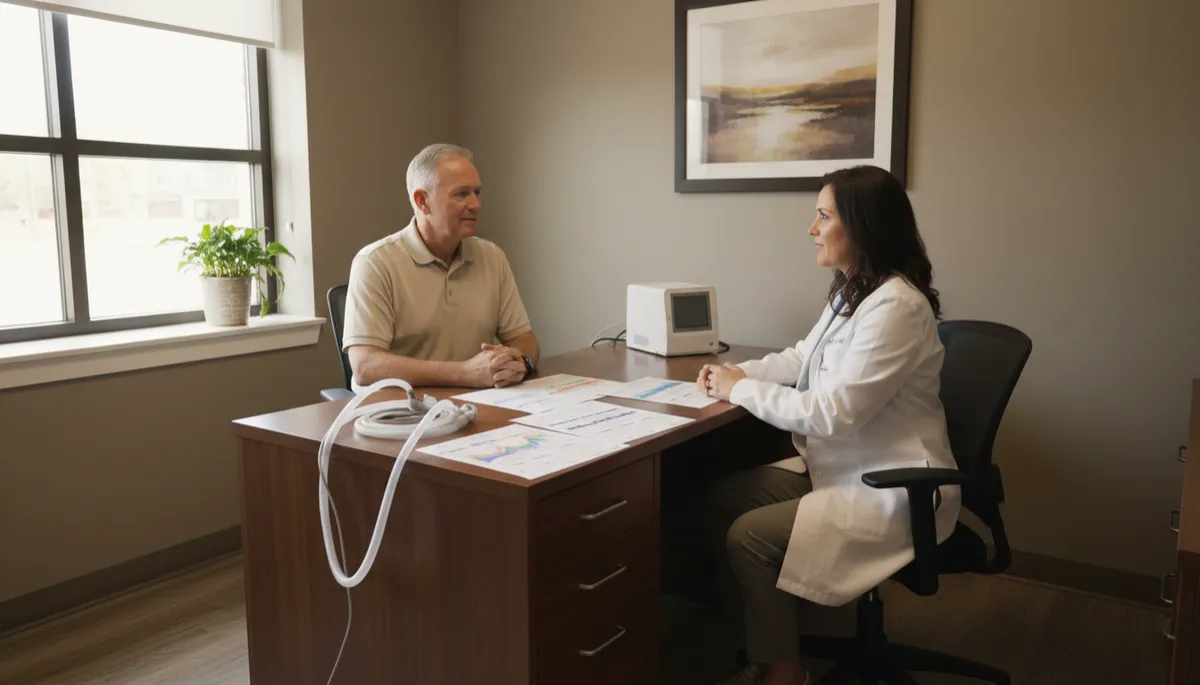
Clear medical documentation and specialist input can significantly strengthen a Sleep Apnea VA claim.
Health Risks of Untreated Sleep Apnea for Veterans
Sleep Apnea is far more serious than an inconvenience or a minor annoyance. The health risks associated with untreated Sleep Apnea are significant, and they can be especially concerning for veterans who may already have elevated cardiovascular and mental health risks. Repeated drops in oxygen levels and fragmented sleep place stress on the heart and circulatory system. Over time, this can contribute to high blood pressure, heart disease, stroke, and irregular heart rhythms. It can also worsen diabetes, metabolic syndrome, and other chronic conditions that are already common among veterans.
Beyond physical health, Sleep Apnea can severely affect mood, cognition, and daily functioning. Chronic fatigue, irritability, difficulty concentrating, and memory problems can interfere with work performance, relationships, and quality of life. For veterans managing PTSD, depression, or anxiety, untreated Sleep Apnea may intensify symptoms or make mental health treatment less effective. These health risks underscore why it is so important for veterans to seek evaluation, treatment, and, when appropriate, disability benefits that recognize the impact of this condition.
💡 Pro Tip: If you have been diagnosed with Sleep Apnea, keep records of how it affects your daily life—such as missed work, difficulty driving, or strain on your relationships. This information can support both your treatment plan and your disability claim.
Symptoms Awareness: Recognizing the Signs of Sleep Apnea
Symptoms awareness is a crucial part of both protecting your health and building a strong VA claim. Many veterans look back on their time in service and realize that they had symptoms of Sleep Apnea long before they received a diagnosis. Common signs include:
Loud, chronic snoring that others notice, often interrupted by pauses, gasps, or choking sounds.
Waking up with a dry mouth, sore throat, or morning headaches.
Excessive daytime sleepiness, dozing off during meetings, while watching TV, or even while driving.
Difficulty concentrating, memory problems, or feeling mentally foggy during the day.
Irritability, mood changes, or worsening symptoms of existing mental health conditions.
If you recognize these signs in your current life or remember them from your time in service, it is important to discuss them with your health care provider. From a VA perspective, statements from you, your spouse, roommates, or fellow service members describing these symptoms during your service can be powerful supporting evidence. Even if your service treatment records do not mention Sleep Apnea, detailed lay statements can help fill in the gaps and show that your symptoms began while you were in uniform.
Diagnosing Sleep Apnea: What the VA Looks For
When it comes to diagnosing Sleep Apnea for VA purposes, a formal diagnosis supported by a sleep study is almost always required. Self-reported symptoms and even strong lay statements are helpful, but they are not enough on their own to establish that you have Sleep Apnea as a medical condition. The VA typically expects:
A diagnosis of Sleep Apnea from a qualified medical professional, often a sleep specialist or pulmonologist.
Results from a sleep study showing the severity of breathing interruptions, oxygen level drops, and related findings.
Documentation of prescribed treatment, such as a CPAP machine, BiPAP, or other airway support device.
The severity of your Sleep Apnea and your prescribed treatment directly influence your disability rating. For example, veterans who require a CPAP or similar device are often eligible for a specific minimum rating under the VA’s rating schedule. However, the existence of a CPAP prescription alone does not guarantee service connection. The VA still needs convincing evidence that your Sleep Apnea is related to your service or to another service-connected condition. This is where many claim challenges arise, especially when the diagnosis occurs long after discharge.
📌 Key Takeaway: A sleep study and formal diagnosis are essential building blocks of your claim, but they must be paired with evidence of in-service symptoms and a strong medical nexus opinion to establish service connection.
Common Claim Challenges in Sleep Apnea VA Cases
Sleep Apnea claims face several recurring obstacles that can lead to denial or lower-than-expected ratings. Understanding these claim challenges can help you anticipate and address them in your application or appeal:
Lack of in-service documentation: Many veterans have no record of sleep-related complaints in their service treatment files, even though they experienced symptoms. The VA may interpret this absence as evidence that the condition did not begin in service.
Delayed diagnosis: If your Sleep Apnea diagnosis occurs years after leaving the military, the VA may argue that it is due to post-service factors such as aging, lifestyle, or weight gain rather than military service.
Weak or missing nexus opinion: Without a clear medical opinion tying your current Sleep Apnea to your service or a service-connected condition, the VA is likely to deny service connection even if you have a solid diagnosis.
Inadequate Compensation & Pension (C&P) exam: Some veterans report that their C&P examinations were brief or did not fully consider their symptom history, lay statements, or secondary connections. A poorly documented exam can lead to an unfavorable decision.
Overcoming these obstacles typically requires a combination of thorough personal documentation, supportive statements from others, and strong medical evidence. Many veterans benefit from working with experienced advocates, accredited representatives, or attorneys who understand the nuances of Sleep Apnea claims and can help gather and present the necessary evidence effectively.
Strengthening the Link: Strategies for Connecting Sleep Apnea to Service
While Sleep Apnea can be hard to connect in VA claims, it is not impossible. Many veterans do succeed, especially when they take proactive steps to collect evidence and present a clear narrative. Consider the following strategies:
Gather detailed lay statements: Ask your spouse, family members, roommates, or fellow service members to write statements describing your snoring, breathing pauses, daytime fatigue, and other sleep-related symptoms during and after service. Specific examples and time frames are more persuasive than general comments.
Document your symptom history: Write a clear, chronological account of your symptoms, when they began, how they progressed, and how they relate to key events in your military career (deployments, injuries, weight changes, onset of PTSD, and so on).
Obtain a strong medical nexus opinion: If possible, work with a sleep specialist or other qualified physician who can review your military records, post-service medical records, and lay statements. Ask them to provide a written opinion explaining whether it is “at least as likely as not” that your Sleep Apnea is related to your service or a service-connected condition, and to provide a clear rationale.
Explore secondary service connection: If you have service-connected conditions that can contribute to Sleep Apnea—such as PTSD, chronic pain, or conditions leading to limited activity and weight gain—discuss with your provider whether your Sleep Apnea may be secondary to those issues and ask for a medical opinion if appropriate.
💡 Pro Tip: When requesting a nexus opinion, provide your doctor with a copy of your service records, DD-214, prior rating decisions, and any relevant lay statements. The more context they have, the more specific and useful their opinion can be for your claim.
Sleep Apnea and Disability Benefits: What Is at Stake?
Successfully connecting Sleep Apnea in a VA claim can result in monthly disability benefits and access to additional health care resources. The VA rates Sleep Apnea based on severity and treatment needs, including whether you require a CPAP or other breathing device and how significantly the condition impairs your daily functioning. These ratings can range from noncompensable (0%) to higher percentages that reflect serious health impact and treatment requirements.
For many veterans, disability benefits provide more than financial support. They represent formal recognition that their veteran health issues are real, service-related, and deserving of care. In addition, a service-connected rating for Sleep Apnea can open the door to other benefits, such as access to specialized equipment, priority for certain medical services, and potential eligibility for higher combined ratings when considered alongside other service-connected conditions. Given the serious health risks and life impacts of Sleep Apnea, ensuring that your condition is accurately recognized and rated can be a vital part of your long-term health and financial stability.
Balancing Self-Advocacy and Professional Support
Navigating Sleep Apnea VA claims requires both persistence and an understanding of how the system evaluates evidence. While it is entirely possible to file and win a claim on your own, many veterans find it helpful to work with a Veterans Service Organization (VSO), accredited representative, or attorney who focuses on VA disability law. These professionals can help you interpret rating decisions, identify gaps in your evidence, and develop a strategy for appeals if necessary. They can also assist you in framing your Sleep Apnea as part of a broader picture of sleep disorders and related health issues rather than as an isolated condition.
At the same time, your own role as an advocate for your health and benefits is critical. No one knows your symptoms, your service history, and your daily struggles better than you do. By staying engaged in your treatment, keeping thorough records, and clearly communicating your experiences, you provide the foundation that professionals can build upon. Combining informed self-advocacy with targeted professional support often leads to the strongest outcomes in complex Sleep Apnea claims.
Moving Forward: Protecting Your Health and Your Rights
Sleep Apnea may be hard to connect in VA claims, but it is not impossible. The key is recognizing that this condition sits at the intersection of diagnosis challenges, complex veteran health issues, and strict evidentiary standards. By increasing your symptoms awareness, pursuing timely and thorough evaluation, and building a strong evidentiary record that includes medical opinions and lay statements, you can significantly improve your chances of securing the disability benefits you have earned through your service.
If you suspect that you have Sleep Apnea—or if you already have a diagnosis but have been denied benefits—consider taking the following next steps:
Discuss your symptoms and concerns with your health care provider and ensure your records fully reflect your condition and treatment.
Request copies of your service treatment records and any prior VA decisions to better understand how your case has been evaluated so far.
Reach out to a VSO, accredited representative, or attorney if you need guidance on appeals, secondary service connection, or obtaining a strong nexus opinion.
Your sleep, your health, and your future quality of life are too important to ignore. By taking informed, proactive steps, you can address your Sleep Apnea, reduce its health risks, and pursue the VA recognition and support you deserve. While the path may be challenging, you do not have to walk it alone—and understanding why Sleep Apnea is hard to connect in VA claims is a powerful first step toward overcoming those challenges.
📌 Call to Action: For additional support, resources, and guidance tailored to veterans navigating Sleep Apnea and VA disability claims, visit www.valorhealth.net.