

Reaching 100% VA Disability: Your Complete Guide
VA Disability, 100% Disability Benefits, Veterans Rights
Stuck at 90% VA Disability? Understanding What It Takes to Reach 100%
If you’re sitting at a 90% VA Disability rating, staring down that last 10% like it’s a brick wall, you’re not imagining it—going from 90% to 100% is one of the toughest jumps in the entire VA system. But it’s not impossible, and you don’t have to accept “almost there” as the final word. When you understand the evidence-based rules, the math behind ratings, and how the VA Claims Process really works, you can attack that last stretch with clarity and purpose instead of confusion and frustration.
Why 90% Feels Like a Dead End — And Why It Isn’t
Let’s be blunt: a 90% VA Disability rating is life-changing on paper, but it often doesn’t reflect the full impact your conditions have on your daily life. Many veterans at 90% are dealing with constant pain, serious mental health challenges, or limitations that make work nearly impossible. Yet the system still labels them as less than “totally” disabled. That gap between reality and rating is exactly what this guide is here to attack head-on.
The good news is this: the VA rating schedule is not magic, and it’s not guesswork. It is supposed to be evidence-based. When you know how to present the right medical and lay evidence, how to challenge bad exams, and how to position your case, you gain real leverage. Your mission is simple—force the VA to see the true severity of your conditions and award the 100% Disability Benefits you’ve earned.
Step One: Understand What “100%” Really Means
Before you swing at the target, you need to know exactly what you’re aiming at. There are several paths to what most people call “100%,” and each has different rules and strategies. If you don’t understand these routes, you risk swinging hard in the wrong direction and wasting months—or years—in the VA Claims Process.
Schedular 100% Rating: Your combined conditions add up, under VA math, to a 100% rating using the rating schedule.
Individual Unemployability (TDIU): You’re not rated 100% under the schedule, but the VA recognizes that your service-connected disabilities prevent you from maintaining substantially gainful employment, so they pay you at the 100% rate.
Temporary 100% Ratings: Short-term increases for hospitalizations, surgeries, or certain treatments. Useful, but not a long-term solution if your disabilities are permanent.
If you’re at 90%, your two most realistic long-term goals are either a schedular Disability Rating Increase to 100% or TDIU. Both demand hard, targeted evidence and a clear strategy. Wishing, guessing, or sending in random documents is not a strategy. You need to build your case like you’re preparing for a high-stakes inspection—because you are.
💡 Pro Tip: Don’t get hung up on the label. Whether you reach 100% through the rating schedule or TDIU, the pay rate and core benefits are the same. Focus on the path that fits your actual limitations and evidence.
The Brutal Truth About VA Math at 90%
The VA doesn’t add ratings like normal people. Instead, they use “VA math,” combining disabilities based on the percentage of your body that’s still considered “efficient.” At 90%, the VA says you’re 90% disabled and 10% efficient. That last 10% is where the system gets especially unforgiving. A new 10% condition doesn’t take you from 90% to 100%. It takes 10% of the remaining 10%—which is just 1%. That still rounds to 90%.
In practice, this means you often need either:
One major condition legitimately rated higher (for example, 50% to 70%), or
Several additional moderate conditions (20%–40%) that combine to push you over the edge.
This is why you cannot afford guesswork. You need an evidence-based plan: identify which of your current ratings are too low, which conditions are missing entirely, and where the medical record fails to reflect what you live with every single day. That’s the fuel for a serious Disability Rating Increase strategy.
Evidence-Based: The Backbone of a Winning 100% Claim
The VA makes decisions based on evidence—period. Not on how sympathetic your story is, not on how long you served, and not on how obvious your limitations seem to you and your family. If it isn’t documented, it might as well not exist in the VA’s world. That’s harsh, but it’s also empowering, because it gives you a clear mission: build an evidence-based record that the VA cannot ignore or explain away.
The Four Pillars of Strong VA Disability Evidence
Medical Records: VA and private treatment notes that show diagnoses, symptoms, frequency, and impact on daily functioning and work. If your records are thin, sporadic, or vague, it’s time to tighten them up.
Disability Evaluation Reports: Compensation & Pension (C&P) exams and any independent medical opinions. These are often the make-or-break documents in your file, so you must understand and, when needed, challenge them.
Lay Statements: Detailed statements from you, your spouse, family, coworkers, or supervisors describing how your conditions limit your daily life and work. These can powerfully support a Disability Rating Increase when they match the medical picture.
Employment Evidence: For TDIU, this includes work history, performance issues, accommodations, reduced hours, or termination related to service-connected conditions.
💡 Pro Tip: Every piece of evidence should answer one core question: “How does this condition limit my ability to function and work?” If it doesn’t, it’s weak. If it does, it’s gold.
Mastering the Disability Evaluation: Don’t Let a Bad Exam Sink You
The Disability Evaluation process—especially C&P exams—is where many 90% veterans get knocked off course. You show up, you’re rushed through a checklist, and later you read a report that barely resembles what you said or what you live with. Then the VA leans heavily on that exam to deny your Disability Rating Increase or TDIU. You cannot treat these exams casually. You need to walk in prepared and walk out knowing exactly what was documented.
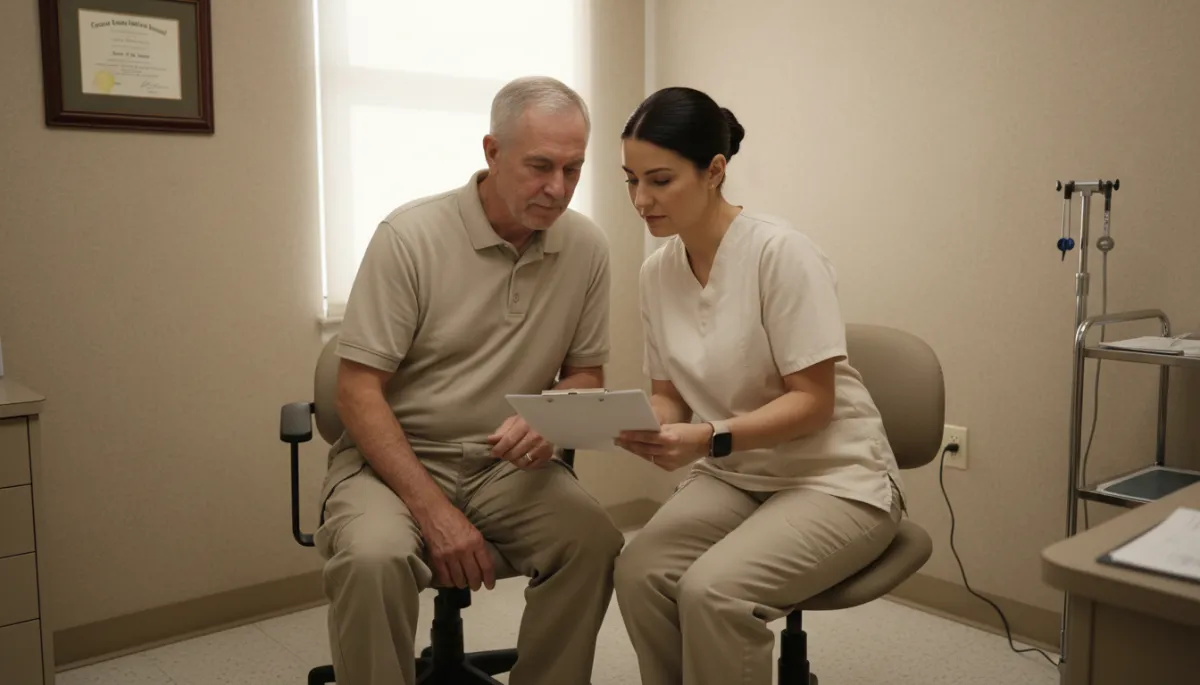
-toned scene of a veteran sitting across from a medical in a small examination room, both...
A focused, honest disability evaluation can make or break your 100% disability claim.
How to Walk Into a C&P Exam Like You Mean Business
Know the Criteria: Look up the rating criteria for your conditions in the VA Schedule for Rating Disabilities. If 70% PTSD requires certain symptoms, you need to know them cold so you can clearly describe what you experience—without exaggeration, but without minimizing.
Bring Notes: Don’t rely on memory when your anxiety, pain, or stress may spike. Bring a written list of your worst symptoms, how often they occur, and how they affect work, relationships, and daily tasks.
Be Brutally Honest About Bad Days: Many veterans downplay their symptoms out of pride or habit. This is not the time. The VA rates based on your level of impairment, not your level of toughness. Describe your worst days, not your best performance on a good day.
Request the Report: After the exam, get a copy of the examiner’s report. If it’s inaccurate, incomplete, or contradicts the medical record, you can challenge it with a statement, new evidence, or an independent medical opinion.
💡 Pro Tip: If your C&P exam lasted only a few minutes or the examiner barely looked up from their screen, document that in a written statement. That kind of detail can support an argument that the exam was inadequate.
Cracking the VA Claims Process: From 90% to 100% With Purpose
The VA Claims Process can feel like a maze, but at its core, it follows a predictable pattern. Understanding that pattern lets you stop reacting and start planning. If you’re seeking a Disability Rating Increase from 90% to 100% or TDIU, you need to treat this like a campaign, not a shot in the dark.
The Core Stages of a Rating Increase or TDIU Claim
File the Claim: Use the appropriate forms—typically VA Form 21-526EZ for an increase and VA Form 21-8940 for TDIU. Be specific about which conditions you’re seeking an increase for and why.
Submit Focused Evidence: Don’t bury the VA in irrelevant paperwork. Submit targeted medical records, lay statements, and any independent opinions that speak directly to the rating criteria and your inability to work, if applicable.
Attend All Exams: Missing a scheduled Disability Evaluation can sink your claim outright. If you can’t attend, call and reschedule. Document everything.
Review the Decision: When the rating decision arrives, read it like a mission debrief. What evidence did they rely on? What did they ignore? Where did they misapply the law or rating criteria?
Appeal With Intention: If the decision is wrong, don’t just say “I disagree.” Use the modern appeals options (Higher-Level Review, Supplemental Claim, or Board Appeal) to attack the weaknesses in the decision with new and relevant evidence.
💡 Pro Tip: Keep a simple claim log—dates you filed, exams completed, calls made, and letters received. Staying organized is a quiet but powerful weapon in a long claim or appeal.
Targeted Strategies to Push a 90% Rating to 100%
You don’t get from 90% to 100% by hoping the VA finds something you missed. You get there by deliberately building a case that either:
Justifies higher ratings for your existing conditions, or
Establishes new, service-connected conditions that accurately reflect your overall impairment, or
Proves that your service-connected conditions, taken together, make you unemployable (TDIU).
Strategy 1: Reevaluate Your Existing Ratings
Start by pulling your rating decision letters and comparing your current ratings with the official criteria. If your back is rated at 20% but you have limited forward flexion, frequent flare-ups, or doctor-prescribed bed rest, you might qualify for 40% or higher. If your PTSD is at 50% but you struggle to maintain work, have serious relationship issues, or frequent panic attacks, you may deserve 70% or even 100% for that single condition alone.
This is where an evidence-based approach is non-negotiable. You need current medical records that describe your limitations in terms that match the rating schedule. Work with your providers. Tell them you’re in the middle of a VA Disability claim and you need your records to accurately reflect how bad things are—not sugarcoated, not vague.
Strategy 2: Secondary Conditions — The Hidden Boosters
Many veterans leave ratings on the table because they don’t claim secondary conditions. If your service-connected knee causes hip or back problems, those may be secondary. If your chronic pain leads to depression, that’s another potential claim. Sleep apnea, migraines, radiculopathy, nerve damage, and gastrointestinal issues are often tied to existing service-connected disabilities. Each valid secondary condition can contribute to your combined rating and push you closer to 100%.
Again, this must be evidence-based. You need medical opinions linking the secondary condition to your established service-connected disability. A strong nexus statement from a qualified provider can be the difference between denial and a powerful Disability Rating Increase.
Strategy 3: TDIU — When Work Is No Longer Realistic
If your service-connected conditions make steady work unrealistic, TDIU may be your most direct path to 100% Disability Benefits. You don’t need a schedular 100% rating; you need to show that your disabilities prevent you from maintaining substantially gainful employment. This is especially critical for veterans whose conditions may not individually reach 100% but, together, make work impossible or unsustainable.
TDIU is not charity. It is a recognition that the impact of your VA Disability on your ability to earn a living is total. That’s exactly what the 100% rate is meant to compensate. For TDIU, your Disability Evaluation must capture how your symptoms interfere with concentration, attendance, physical tasks, reliability, and social interaction in a work setting. Employment records, HR write-ups, or statements from former supervisors can be powerful evidence here.
💡 Pro Tip: Don’t assume that because you’ve “pushed through” for years, you have to keep doing it. If your body and mind are breaking down under the weight of your conditions, TDIU is exactly the benefit designed for you.
Common Mistakes That Keep Veterans Stuck at 90%
Knowing what to do is only half the battle. You also need to know what to stop doing. These common mistakes quietly sabotage strong cases and keep veterans locked at 90% when they should be at 100%.
Minimizing Symptoms: Saying “I’m fine” at appointments, skipping details, or trying to appear stronger than you are. The VA only rates what’s documented, not what you hide out of pride.
Submitting Scattershot Evidence: Sending in stacks of records without a clear narrative or focus. More paper doesn’t equal stronger proof. Clear, targeted, evidence-based documentation does.
Ignoring Mental Health: Many veterans focus only on physical conditions and downplay PTSD, depression, or anxiety. Mental health ratings can be significant and may be the key to a Disability Rating Increase or TDIU.
Missing Deadlines: Letting appeal windows close or ignoring VA letters. The system is slow, but the timelines for you to respond are not. Miss them, and you lose ground you fought hard to gain.
When to Get Backup: VSOs, Attorneys, and Independent Medical Opinions
You don’t have to fight this alone. In fact, you shouldn’t. Veterans Service Organizations (VSOs), accredited agents, and attorneys who focus on VA Disability law can help you navigate complex appeals, challenge bad exams, and identify legal errors in rating decisions. Independent medical opinions can fill the gaps when VA providers won’t put critical details in writing or when C&P exams are flat-out wrong.
The key is to choose support that respects your role in the process. This is your life, your body, your future. A good representative will help you build a stronger evidence-based case, not just file forms and hope for the best.
Turning 90% Frustration Into a 100% Game Plan
Being stuck at 90% can feel like a slap in the face—close enough to see 100%, but not close enough to touch it. But you are not powerless here. When you strip away the confusion, what’s left is a system that responds to one thing: strong, targeted, evidence-based claims. That’s where you win.
Here’s your blunt, no-nonsense roadmap:
Know Your Target: Decide whether you’re aiming for schedular 100%, TDIU, or both. Understand what each requires.
Audit Your File: Compare your current ratings with the official criteria. Identify under-rated conditions and missing secondary issues.
Strengthen Your Evidence: Work with your doctors, mental health providers, and loved ones to document how your conditions limit your daily life and work. Make your Disability Evaluation impossible to ignore.
File With Precision: Submit focused claims for a Disability Rating Increase, secondary conditions, and TDIU if warranted. Don’t just say “I want more.” Show exactly why you meet the criteria for 100% Disability Benefits.
Fight Smart on Appeal: If the VA gets it wrong—and sometimes they will—appeal with strategy, not emotion. Attack weak exams, misapplied criteria, and ignored evidence.
You gave the military your strength, your time, and in many cases, your health. You do not owe the VA your silence or your patience when the rating doesn’t match your reality. You owe yourself a full, fair VA Disability evaluation and the benefits that follow from it. The jump from 90% to 100% is tough, but it is absolutely possible when you stop guessing, start planning, and demand that the evidence speak loudly and clearly on your behalf.
Don’t accept “almost” as the final word on your service and your sacrifice. Build your case. Challenge bad decisions. Use every tool—medical evidence, lay statements, representation, and appeals—to force the system to see what you live with every day. That’s how you turn a stubborn 90% rating into the 100% Disability Benefits you’ve already earned the hard way.
📌 Call to Action: If you’re ready to turn this information into a concrete strategy for your own claim, visit www.warriorbenefits.com to get support tailored to your situation.