
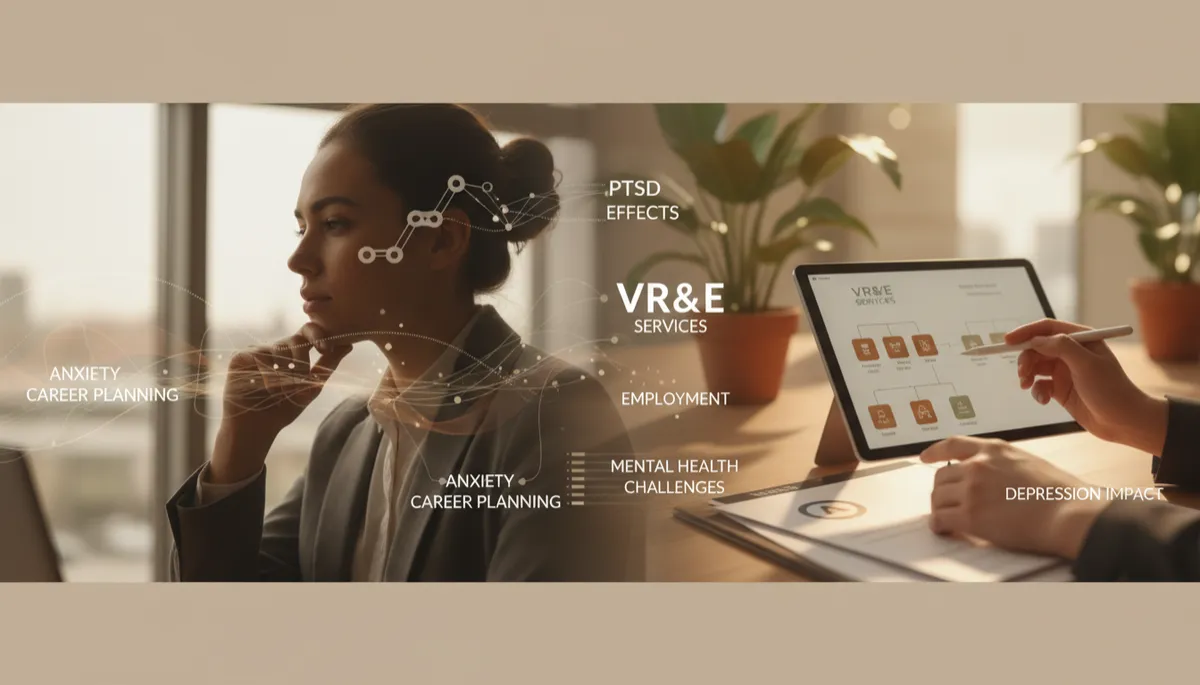
PTSD, Anxiety & Depression in VR&E Career Planning
VR&E, PTSD Effects, Anxiety Career Planning, Depression Impact, Mental Health Challenges, Employment Support
How PTSD, Anxiety, or Depression Can Affect VR&E Career Planning
Navigating career decisions is challenging for anyone. When you are also managing post-traumatic stress disorder (PTSD), anxiety, or depression, the process can feel overwhelming—especially within a structured program such as the VA’s Vocational Rehabilitation and Employment (VR&E) Services. This article explores how these mental health challenges can influence your VR&E career planning and how to work with the system to build a realistic, sustainable path to employment.
Understanding VR&E Services and Their Purpose
VR&E Services, sometimes called “Voc Rehab,” are designed to help eligible veterans and service members with service-connected disabilities prepare for, find, and maintain suitable employment. The program offers career counseling, skills assessment, training, education support, and ongoing employment support. When mental health conditions such as PTSD, anxiety, or depression are part of your disability picture, VR&E is meant to consider those factors as it helps you develop a personalized career plan.
A core goal of VR&E is to identify work that is both suitable and sustainable. Suitability means the work fits your skills, interests, and limitations, including mental health limitations. Sustainability means you can reasonably maintain that work over time without it worsening your condition. When PTSD effects, anxiety symptoms, or the impact of depression are not fully acknowledged in planning, a job may look good on paper but prove difficult or even harmful in practice. Recognizing this early is critical to building a plan that truly supports your long-term well-being.
How PTSD Effects Can Influence Career Planning in VR&E
PTSD effects can show up in many ways: intrusive memories, nightmares, hypervigilance, difficulty concentrating, irritability, sleep disturbance, and avoidance of certain places or situations. In a VR&E setting, these symptoms can influence everything from the types of jobs you consider to how you show up at appointments and interviews. Understanding how PTSD interacts with career planning allows you and your counselor to design a plan that respects your needs rather than pushing against them.
Triggers and Work Environments
Many individuals with PTSD have specific triggers—sudden loud noises, crowded spaces, certain authority dynamics, or even particular smells or locations. When these triggers are common in a potential workplace, they can raise your stress level and increase the risk of symptom flare-ups. For example, a job in law enforcement, emergency response, or high-intensity security work might closely resemble the environments associated with your trauma. Even seemingly low-risk jobs, such as working in a busy retail environment or open-plan office, can be challenging if constant noise and unpredictable interactions fuel hypervigilance or panic.
Within VR&E career planning, it is important to discuss these PTSD effects openly. This is not about limiting your future; it is about identifying work environments that will be less likely to trigger symptoms. A counselor who understands your mental health challenges can help you explore roles with more predictable routines, quieter spaces, or flexible scheduling options that support ongoing treatment and self-care.
Concentration, Memory, and Learning New Skills
PTSD can affect concentration and short-term memory, making it harder to absorb new information, follow complex instructions, or multitask. These challenges may become more noticeable when you are under pressure, such as during exams, training programs, or the early months in a new job. In VR&E, this can influence the types of training or academic programs that are realistic and the pace at which you move through them.
If you notice you need extra time to read, process, or recall information, it is important to share this with your VR&E counselor. Together, you can explore strategies such as reduced course loads, extended test time, tutoring support, or accommodations in training environments. These are not signs of weakness; they are tools that allow you to demonstrate your abilities without being undermined by PTSD symptoms.
Sleep, Energy, and Reliability
Chronic sleep problems are a common PTSD effect. Nightmares, difficulty falling asleep, and frequent waking can leave you exhausted the next day. Over time, this can affect punctuality, reaction time, mood, and decision-making. In the context of VR&E Services, this may influence what shifts you can manage, how far you can commute, and how demanding your daily schedule can reasonably be without worsening symptoms.
When VR&E staff understand the impact of sleep-related PTSD effects, they can help you design a plan that accounts for variable energy levels. This may include focusing on roles with flexible start times, remote or hybrid options, or jobs that do not require extended overnight shifts. Being realistic about how sleep and energy affect your functioning is a key part of creating a sustainable career path rather than one that burns you out quickly.
Anxiety and Career Planning: Navigating Fear, Worry, and Uncertainty
Anxiety can significantly shape how you approach career decisions, and this is especially true in a structured program like VR&E. Anxiety career planning challenges often involve fear of failure, fear of judgment, and worry about making the “wrong” choice. These feelings can slow down decision-making, lead to avoidance of important steps, or push you into choices that feel “safe” but do not align with your strengths or interests.
Decision Paralysis and Overthinking Career Options
When anxiety is high, even simple decisions can feel overwhelming. In VR&E, you may be asked to choose training programs, degree paths, or specific job goals. Anxiety can lead to over-researching, second-guessing, and difficulty committing to a plan. You might worry about wasting benefits, disappointing your counselor, or not being able to complete the program. This kind of decision paralysis can delay progress and increase frustration for both you and your VR&E team.
A practical way to address this is to break decisions into smaller steps. Instead of choosing a final career path immediately, you might start by identifying broad fields of interest, then exploring specific roles within those fields. Your counselor can help you gather information, weigh pros and cons, and set short-term goals. Recognizing anxiety as part of the process—not a personal failing—allows you to work with it rather than getting stuck in it.
Social Anxiety, Interviews, and Networking
Many career paths involve interviews, group projects, presentations, or networking events. For individuals with social anxiety, these situations can be extremely stressful. You may dread mock interviews, avoid career fairs, or hesitate to talk with potential employers. This can make it harder to take advantage of employment support resources that VR&E offers, such as resume workshops, job clubs, or employer outreach events.
Within VR&E Services, you can discuss these mental health challenges and request tailored support. For example, you might ask to start with one-on-one interview practice before attending group workshops, or you may prefer virtual interviews over in-person ones when employers allow it. Over time, gradual exposure and skill-building can reduce anxiety, but your plan should respect your current limits and not push you into situations that feel unmanageable.
Physical Symptoms and Daily Functioning
Anxiety is not just a mental experience; it often shows up physically as racing heart, sweating, shaking, stomach issues, or headaches. When you are planning for employment, these symptoms can affect attendance, focus, and confidence. For example, panic attacks during a commute or in crowded training environments can make you question whether you can handle a particular job or schedule. Recognizing these as anxiety career planning factors allows your VR&E counselor to help you identify accommodations or alternative roles that reduce these stressors.
📌 Key Takeaway: Anxiety does not disqualify you from meaningful work. It simply means your VR&E career plan should include strategies that address decision-making, social demands, and physical symptoms in a realistic, compassionate way.
Depression Impact on Motivation, Energy, and Career Goals
Depression can affect nearly every aspect of VR&E participation. Common symptoms include low mood, loss of interest in activities, fatigue, feelings of worthlessness, difficulty concentrating, and changes in sleep or appetite. When you are living with depression, even tasks that once felt routine—attending appointments, filling out forms, or following up on emails—can feel heavy and draining. This depression impact can be misunderstood as lack of interest or motivation, when in fact it is a reflection of a serious mental health condition.
Motivation and Goal-Setting in VR&E
Depression can make it hard to imagine a positive future, which is a challenge when you are asked to set long-term career goals. You may know logically that you have skills and potential, but emotionally you might feel stuck, hopeless, or undeserving of success. This can lead to very modest goals that do not reflect your true capabilities, or to inconsistent follow-through on steps that move you toward your chosen path.
A supportive VR&E counselor can help break larger goals into manageable steps and celebrate small wins. For example, instead of focusing immediately on completing a degree, you might start with applying for one class, attending an orientation, or updating a resume. Recognizing the depression impact on motivation means pacing the plan realistically and building in encouragement and accountability without judgment.
Energy, Fatigue, and Workload Tolerance
Depression often brings persistent fatigue and low energy, even when you are sleeping adequately. In VR&E training or school programs, this can make full-time schedules very difficult. You may find that you can manage a few hours of focused activity but feel drained afterward. Without acknowledging this, you might agree to a plan that looks good on paper but quickly becomes unsustainable, leading to dropped classes, incomplete training, or job loss.
By discussing your energy patterns with your counselor, you can explore options such as part-time enrollment, staggered training, or jobs with built-in breaks. VR&E Services can often coordinate with schools or training programs to arrange reasonable accommodations. The goal is not to lower expectations, but to align them with your current capacity so that progress is steady and realistic.
Self-Worth, Confidence, and Career Identity
Depression can distort how you see yourself, leading to harsh self-criticism and a tendency to minimize your strengths. In career planning, this may show up as downplaying your experience, avoiding competitive fields, or assuming you will not be hired. You may hesitate to pursue promotions or higher-paying roles because you do not feel capable or deserving, even when your skills say otherwise. This depression impact can quietly limit your career trajectory if it is not addressed directly.
“Mental health conditions do not erase your talents, training, or potential. They change how you access those strengths—and that is exactly what thoughtful VR&E planning is meant to support.”
Sharing these internal struggles with your counselor can feel vulnerable, but it can also open the door to more affirming career exploration. Together, you can identify past successes, transferable skills, and work environments where you are more likely to thrive, even when depression is part of your reality.

Quiet reflection time can help align VR&E goals with mental health needs.
Integrating Mental Health Challenges into Your VR&E Plan
PTSD, anxiety, and depression are not side issues; they are central factors in how you work, learn, and manage stress. Integrating these mental health challenges into your VR&E plan means acknowledging them openly, planning around them thoughtfully, and using the full range of VR&E Services and external supports available to you. This integration is not about labeling you as “limited.” It is about designing a career path that is realistic, humane, and compatible with your recovery.
Communicating Honestly with Your VR&E Counselor
Honest communication is essential. Your counselor cannot plan around PTSD effects, anxiety career planning difficulties, or depression impact if they do not know what you are experiencing. While it can be uncomfortable to talk about symptoms, you do not need to share every detail of your trauma. Instead, focus on how your mental health affects your daily functioning, such as:
How you sleep and how rested you feel during the day
Your ability to concentrate, remember instructions, and manage stress
Situations or environments that tend to trigger anxiety or PTSD symptoms
How your mood and energy fluctuate over days or weeks
Framing your experiences in functional terms helps your counselor understand what kinds of work tasks, schedules, and settings are more or less likely to be successful for you. This, in turn, allows VR&E Services to be tailored more precisely to your real-life needs.
Coordinating VR&E Services with Mental Health Treatment
VR&E is one part of your support system, not a replacement for therapy or psychiatric care. Ideally, your mental health providers and your VR&E counselor are working in parallel toward the same goal: helping you build a meaningful, sustainable life. When possible, consider allowing limited coordination between your treatment team and your VR&E counselor (within the bounds of your comfort and privacy preferences). This can help ensure that your career plan aligns with your treatment plan, especially if you are adjusting medications, attending intensive therapy, or experiencing symptom flare-ups.
💡 Pro Tip: Bring notes from therapy sessions (without personal details) that summarize your current functional strengths and limitations. This can make it easier to translate clinical information into practical career planning decisions within VR&E.
Employment Support and Workplace Accommodations Through VR&E
VR&E Services extend beyond training and education. A major component is employment support—helping you find and keep work that fits your abilities and limitations. When PTSD, anxiety, or depression are part of your disability profile, employment support may include assistance with job search strategies, interview preparation, and, in some cases, guidance on reasonable accommodations under disability laws.
Examples of Reasonable Accommodations for Mental Health Conditions
Reasonable accommodations are adjustments that allow you to perform the essential functions of your job without imposing undue hardship on the employer. For mental health challenges, accommodations might include:
Flexible start times or modified schedules to account for sleep issues or therapy appointments
A quieter workspace or noise-reducing headphones to reduce hypervigilance or anxiety
The option to work from home part of the week to manage energy and focus
Written instructions and checklists to support concentration and memory
Short, regular breaks during the day to use grounding or coping skills
VR&E employment support professionals can help you think through which accommodations might be most helpful and how to request them appropriately if you choose to disclose your condition. They can also help you prepare for conversations with supervisors or human resources staff, focusing on what you need to perform your job effectively rather than on the details of your diagnosis.
Managing Symptom Flare-Ups While Employed
Even with a thoughtful career plan and strong employment support, there may be times when PTSD effects, anxiety symptoms, or depression impact your work more intensely. Planning for these possibilities is part of responsible VR&E career planning. You and your counselor can discuss strategies such as:
Identifying early warning signs that your symptoms are increasing
Knowing when to adjust your schedule, workload, or environment temporarily
Updating your mental health providers about new stressors at work
Using leave policies or short-term disability options if necessary
Building this kind of contingency planning into your VR&E process does not mean you expect failure. Instead, it reflects an understanding that mental health conditions can fluctuate and that having a plan in place can protect both your employment and your well-being when challenges arise.
Practical Strategies for Veterans Navigating VR&E with PTSD, Anxiety, or Depression
While each person’s situation is unique, certain practical strategies can make VR&E career planning more manageable when you are living with mental health challenges. The following approaches can help you stay engaged, advocate for your needs, and move steadily toward employment that supports your long-term health.
Prepare for Appointments in Advance
Symptoms of PTSD, anxiety, and depression can make it hard to think clearly in the moment. Before VR&E meetings, consider writing down:
Questions you want to ask about training, benefits, or employment support
Recent changes in your symptoms or treatment that affect your daily functioning
Any tasks from the last meeting that you struggled to complete and why
Bringing notes can help you stay focused and ensure that your counselor gets an accurate picture of how PTSD effects, anxiety, or depression impact your progress. It also reduces the pressure to remember everything on the spot, which can be particularly helpful during high-anxiety days.
Pace Yourself and Respect Your Limits
It can be tempting to push yourself aggressively once you have access to VR&E Services, especially if you feel pressure to “catch up” or make up for lost time. However, ignoring your mental health limits often leads to setbacks. Instead, work with your counselor to pace your plan: start with manageable workloads, build in rest periods, and adjust as you learn more about what you can handle consistently.
Remember that sustainable progress is more valuable than rapid progress followed by burnout. Employment support is most effective when it respects the full reality of your mental health challenges and adapts to them, rather than expecting you to function as though they do not exist.
Build a Support Network Around Your Career Goals
VR&E is one important resource, but it is not the only one. Consider involving trusted friends, family members, peer support groups, or mentors in your career journey. They can help you stay accountable to your goals, offer perspective when anxiety or depression distort your thinking, and remind you of your strengths when PTSD effects feel overwhelming. Some veterans also find value in connecting with others who have successfully navigated VR&E while managing mental health conditions; their experiences can provide both practical tips and hope.
Conclusion: You Deserve a Career That Honors Your Service and Your Health
PTSD, anxiety, and depression can significantly affect how you approach VR&E career planning, but they do not erase your potential or your right to meaningful work. By acknowledging PTSD effects, recognizing anxiety career planning challenges, and understanding the depression impact on motivation and energy, you can work with VR&E Services to design a plan that fits who you are today—not who you think you “should” be. Mental health challenges are real, but so are your strengths, skills, and capacity to grow.
Thoughtful employment support, honest communication with your counselor, and a willingness to integrate treatment and career planning can help you move toward a future where your work supports your recovery instead of undermining it. You are not alone in this process. With the right combination of VR&E resources, mental health care, and personal support, it is possible to build a career that honors both your service and your ongoing journey toward wellness.
📌 Next Step: If you’re ready for one-on-one guidance with your VR&E journey, visit PathfinderBenefits.com to explore personalized support options.