
Emotional Wellness for Veterans: Importance & Strategies
Emotional Wellness, Veterans Mental Health, Mental Health Awareness, Wellness Strategies, Emotional Support
Emotional Wellness: What It Is and Why It Matters in Veterans
Emotional Wellness is more than just “feeling okay.” For veterans, it can shape how each day begins, how relationships feel, and how hopeful the future looks. In this friendly guide, we’ll explore what emotional wellness really means, why it is especially important for veterans, and practical wellness strategies to support Veterans Mental Health and overall quality of life.
Understanding Emotional Wellness in Everyday Terms
Emotional Wellness is the ability to understand, manage, and express your feelings in a healthy way. It does not mean being happy all the time or never feeling stressed. Instead, it is about having the tools to cope with life’s ups and downs, bounce back after tough moments, and still feel a sense of meaning and connection in your life.
For many people, emotions can feel messy or confusing. For veterans, those emotions may also be tied to intense experiences, loss, moral injury, or sudden changes in identity after leaving the military. Emotional Wellness gives you a way to notice what you feel, understand why you feel it, and choose how to respond instead of feeling stuck or overwhelmed by your reactions.
💡 Friendly Reminder: Having strong emotions does not mean you are weak. It means you are human. Emotional Wellness is about learning to work with those emotions, not fight against them.
Why Emotional Wellness Matters So Much for Veterans
Veterans often carry invisible weight: memories of deployments, the stress of high-stakes decisions, time away from family, and the challenge of adjusting to civilian life. All of this can affect Veterans Mental Health in powerful ways. Emotional Wellness does not erase those experiences, but it can make them easier to live with and integrate into a meaningful life story.
Transition stress: Leaving the structure, mission, and camaraderie of the military can feel like losing a part of your identity. Emotional Wellness helps you navigate who you are now, not just who you were in uniform.
Invisible injuries: Conditions such as PTSD, depression, anxiety, and moral injury can shape how you feel day to day. Emotional Wellness practices can work alongside therapy, medication, and other treatments to support healing.
Relationships and family life: Emotional Wellness can improve communication, patience, and understanding with partners, children, friends, and coworkers, making home life more peaceful and connected.
When Emotional Wellness is neglected, everyday stress can feel heavier, small conflicts can turn into big arguments, and it may be harder to enjoy things that once brought joy. On the other hand, when veterans invest in their emotional health, they often notice more energy, better sleep, stronger connections, and a renewed sense of purpose beyond their time in service.
Emotional Wellness vs. Mental Illness: How Are They Different?
It is easy to mix up Emotional Wellness with mental illness, but they are not the same thing. Mental illnesses, such as PTSD or major depression, are medical conditions that may require professional treatment. Emotional Wellness is a broader concept that includes how you handle stress, how you relate to others, and how you view yourself and your life. You can work on emotional wellness whether or not you have a mental health diagnosis.
Think of Emotional Wellness as the foundation of a house. If the foundation is strong, the house can better handle storms. If there are cracks, the whole structure is more vulnerable. Prioritizing Emotional Wellness supports Veterans Mental Health by making it easier to cope with symptoms, stick with treatment, and build a life that feels worth living, even when challenges show up.
📌 Key Takeaway: Emotional Wellness is for every veteran, not just those in crisis. It is preventive, protective, and deeply empowering.
The Role of Mental Health Awareness in the Veteran Community
Mental Health Awareness is a crucial part of supporting veterans. For generations, many service members were taught to “tough it out,” push feelings aside, and keep going no matter what. While resilience is a strength, ignoring emotional pain can make it grow in the dark. Today, more veterans, families, and organizations are speaking openly about Veterans Mental Health, which helps reduce stigma and encourages earlier support.
Mental Health Awareness means recognizing the signs that someone might be struggling, understanding that asking for help is a sign of courage, and knowing where to turn for resources. It also means challenging old beliefs that seeking Emotional Support makes you “weak” or “less of a warrior.” In reality, it takes real strength to face your inner battles and reach out for help when you need it.
For veterans: Awareness helps you notice when stress, anger, numbing, or isolation are becoming too heavy, so you can take action sooner rather than later.
For families and friends: Awareness helps you respond with compassion instead of judgment, and gently encourage your loved one to connect with support.
For communities: Awareness inspires better policies, programs, and resources that respect veterans’ experiences and honor their service.
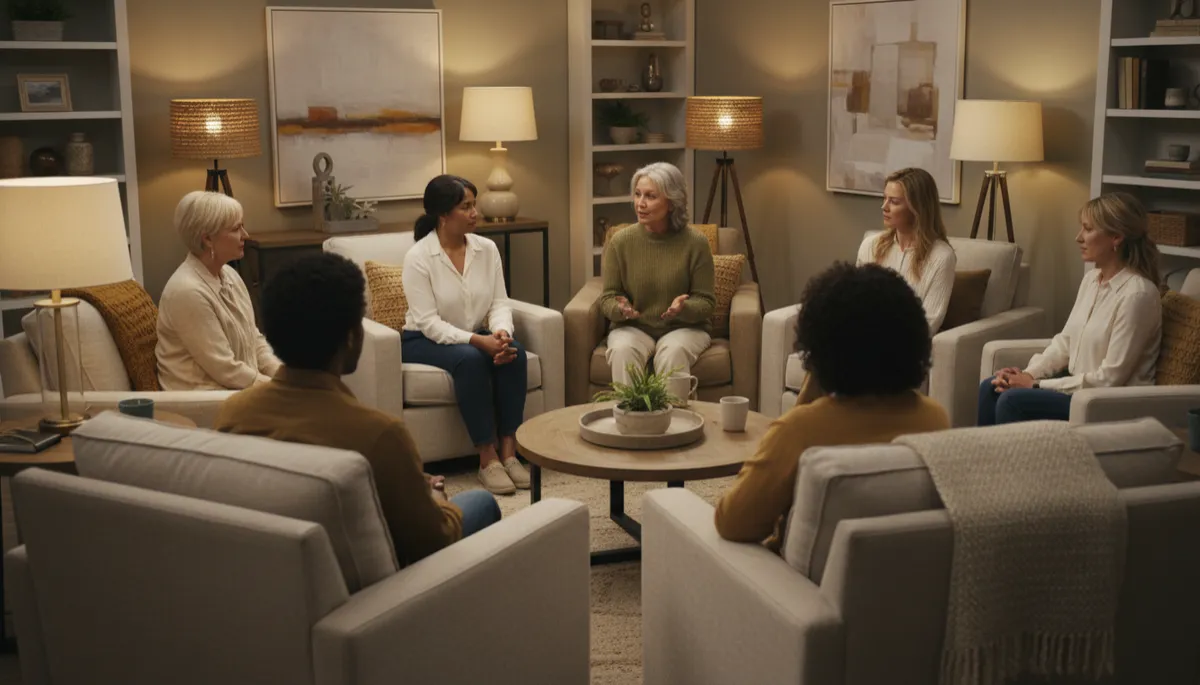
Peer groups provide safe spaces where veterans share experiences and gain emotional support.
Key Ingredients of Emotional Wellness for Veterans
Emotional Wellness is not one single skill. It is a combination of habits, attitudes, and supports that help you feel grounded, connected, and capable of facing life’s challenges. Here are a few core ingredients that are especially important for veterans:
1. Self-Awareness: Noticing What You Feel
Self-awareness is the ability to notice your thoughts, emotions, and body sensations without immediately judging or reacting to them. For veterans, this might mean recognizing when your body tenses up in a crowded store, when your mood drops after a certain memory, or when you start to snap at loved ones after a stressful day. This awareness is the first step toward choosing a different response.
2. Healthy Coping Skills Instead of Numbing
Many veterans learn to push emotions down or numb out with work, alcohol, or distractions. While this might bring short-term relief, it often makes Emotional Wellness harder in the long run. Healthy coping skills, like deep breathing, exercise, talking with a trusted person, or journaling, allow you to move through emotions instead of getting stuck in them. These wellness strategies support both emotional and physical health over time.
3. Connection and Belonging
One of the hardest parts of leaving the military can be losing the sense of brotherhood or sisterhood that comes from serving together. Emotional Wellness grows in relationships where you feel seen, heard, and accepted. This might be with other veterans, family members, friends, support groups, or faith communities. Emotional Support does not have to be dramatic; it can be as simple as having someone you can text on a rough day or grab coffee with when you need to talk.
4. Meaning, Purpose, and Hope
Many veterans describe feeling like they lost their mission after separating from the service. Emotional Wellness includes reconnecting with a sense of purpose—whether through work, volunteering, creative projects, caregiving, or simply being present for the people you love. Having a reason to get out of bed in the morning, even on tough days, can be a powerful anchor for wellness.
Practical Wellness Strategies Veterans Can Start Using Today
Working on Emotional Wellness does not require a huge life overhaul. Small, steady changes can make a real difference. Here are some friendly, realistic wellness strategies you can begin using right away to support Veterans Mental Health and Emotional Support in your daily routine.
1. Check In with Yourself Each Day
Set aside a few quiet minutes each day—maybe with your morning coffee or before bed—to ask yourself a few simple questions:
How am I feeling emotionally right now? (angry, sad, numb, hopeful, tired, calm)
What might be contributing to this feeling?
What is one kind thing I can do for myself today?
This simple check-in builds self-awareness and reminds you that your emotions deserve attention, not avoidance. Over time, it becomes easier to notice patterns and choose helpful responses instead of automatic reactions.
2. Practice Grounding When You Feel Overwhelmed
Many veterans experience moments of sudden anxiety, flashbacks, or emotional flooding. Grounding techniques help bring your attention back to the present moment and remind your nervous system that you are safe right now. One simple grounding exercise is the “5–4–3–2–1” method:
Name 5 things you can see around you.
Notice 4 things you can touch (clothing, chair, floor).
Listen for 3 sounds you can hear (fan, traffic, voices).
Identify 2 things you can smell or like the smell of.
Focus on 1 thing you can taste or remember tasting.
This exercise can be done quietly in almost any setting and is a powerful tool to support Emotional Wellness during stressful moments.
3. Build a Simple Support Network
Emotional Support does not have to be complicated or formal. Start by identifying two or three people you trust—friends, family, fellow veterans, or a mentor. Let them know you are working on your Emotional Wellness and that you may reach out when you are having a rough day. You can even agree on a simple code word or phrase that signals, “I need to talk,” without having to explain everything right away.
💬 Pro Tip: You do not have to share every detail of your experiences to receive Emotional Support. It is okay to say, “I am not ready to talk about what happened, but I could really use some company today.”
4. Move Your Body in Ways That Feel Good
Physical movement has a powerful impact on Emotional Wellness and Veterans Mental Health. You do not need a hardcore workout routine to benefit. Gentle stretching, walking around the block, gardening, or playing with a pet can all help release tension and boost mood. The key is consistency—doing a little bit most days rather than pushing yourself too hard once in a while and then stopping.
5. Create Small Routines That Bring Comfort
Many veterans miss the structure of military life. Replacing it with small, comforting routines can support Emotional Wellness. This might include a nightly wind-down ritual, a weekly coffee with a friend, or a morning walk while listening to music. Routines give your brain a sense of predictability, which can lower stress and help you feel more grounded.
How Loved Ones Can Offer Emotional Support to Veterans
If you care about a veteran, you might sometimes feel unsure how to help. You cannot “fix” everything, and you are not expected to be a therapist. But your Emotional Support and understanding can make a huge difference in their Emotional Wellness journey. Here are a few gentle, practical ways to show up:
Listen without rushing to solve: Sometimes the most healing thing you can do is simply listen. Let them share as much or as little as they want, without pressing for details. Phrases like “I am glad you told me” or “That sounds really hard” can be very validating.
Ask what they find helpful: Instead of guessing, gently ask, “What helps you feel calmer when you are having a tough day?” or “How can I support you right now?” Respect their answers, even if they are different from what you expected.
Learn about Veterans Mental Health: Reading about PTSD, depression, or other common challenges can help you better understand what your loved one might be going through. This kind of Mental Health Awareness can reduce misunderstandings and frustration on both sides.
Encourage, but do not force, professional help: If you are worried, you can gently suggest talking with a counselor, peer specialist, or doctor. Offer to help with practical steps, like finding a provider or going to the first appointment, but avoid ultimatums or shaming.
❤️ Gentle Note for Caregivers: Your Emotional Wellness matters too. Supporting someone you love can be emotionally draining. Make sure you also have people and practices that refill your own emotional tank.
Professional and Community Resources for Veterans’ Emotional Wellness
You do not have to walk the path of Emotional Wellness alone. Many resources are designed specifically with veterans in mind, combining professional care with peer understanding. While availability can vary by location, here are some common sources of Emotional Support and care:
VA mental health services: The Department of Veterans Affairs offers counseling, medication management, group therapy, and specialized programs for PTSD, substance use, and more. Many locations also provide telehealth options, which can be more convenient and private.
Vet Centers: These community-based counseling centers focus on readjustment and offer individual, group, and family counseling in a more informal setting. They often feel more like a living room than a clinic, which can make it easier to open up.
Peer support groups: Many veterans say that talking with others who “get it” without long explanations is one of the most powerful forms of Emotional Support. Peer groups can be found through local organizations, online communities, or veteran service organizations.
Hotlines and crisis resources: If you or a veteran you love is in crisis, immediate help is available through crisis hotlines and text lines staffed by trained counselors. Reaching out in a moment of pain is a strong, brave step toward safety and Emotional Wellness.
Overcoming Stigma: Redefining Strength and Courage
One of the biggest barriers to Emotional Wellness in veterans is stigma—the fear of being judged, misunderstood, or seen as weak for struggling with emotions or mental health. But here is the truth: you can be a strong, capable veteran and feel overwhelmed, anxious, or depressed. Those experiences do not cancel out your courage or your service; they are part of being a human who has been through a lot.
Redefining strength means recognizing that asking for help, talking about your feelings, or going to therapy are not signs of failure. They are signs that you are choosing to stay in the fight for your own life and well-being. That is a different kind of battle, but it is every bit as honorable. As Mental Health Awareness grows, more veterans are stepping forward to share their stories, which helps others feel less alone and more willing to seek Emotional Support.
Building Your Personalized Emotional Wellness Plan
Emotional Wellness is not one-size-fits-all. What works well for one veteran might not be the right fit for another, and that is okay. The goal is to create a simple, realistic plan that fits your life and supports your Veterans Mental Health in a way that feels doable. Here is a friendly framework to get you started:
Identify your current stress signals. How do you know when you are not okay? Maybe you sleep less, drink more, snap at people, or withdraw. Write down a few personal warning signs so you can spot them earlier.
Choose 2–3 daily wellness strategies. Pick small actions from this article—or others you already know help you—such as a daily walk, a 5-minute breathing practice, or a check-in text with a friend. Consistency matters more than intensity.
List your support people and resources. Include names of friends, family, peer groups, and professionals, as well as any hotlines or crisis resources you trust. Keep this list somewhere easy to find, like your phone or wallet, so you do not have to search when you are struggling.
Set gentle, realistic goals. Instead of “I will never feel anxious again,” try “I will practice one grounding exercise when I notice anxiety,” or “I will reach out to someone at least once a week.”
Remember, your Emotional Wellness plan is a living document. It can change as your life changes. The most important part is that you keep showing up for yourself, even in small ways, again and again.
A Friendly Closing Thought: You Deserve to Feel Whole
If you are a veteran, you have already done hard things. You have served, sacrificed, and carried responsibilities that many people will never fully understand. Emotional Wellness is not about forgetting what you have been through or pretending everything is fine. It is about giving yourself permission to heal, to grow, and to build a life that feels steady, meaningful, and connected—on your own terms.
Investing in Emotional Wellness, embracing Mental Health Awareness, practicing realistic wellness strategies, and allowing yourself to receive Emotional Support are powerful acts of self-respect. They honor both the person you were in uniform and the person you are today. You are not alone in this journey, and you do not have to have everything figured out to take the next small step toward feeling more at peace inside your own skin.
Whether that next step is sending a text to a fellow veteran, scheduling a counseling appointment, taking a quiet walk, or simply pausing to take three slow, deep breaths—you are moving toward greater Emotional Wellness. And you deserve every bit of that care.