
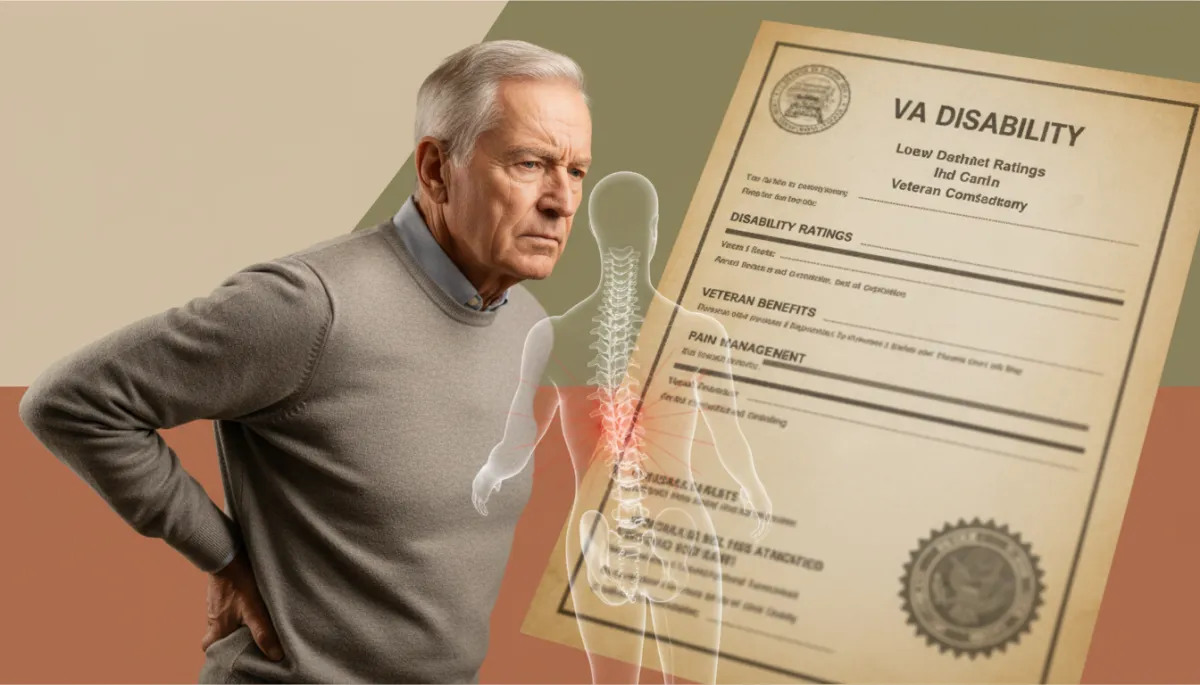
Chronic Pain and VA Disability Ratings Guide
VA Disability, Chronic Pain, Disability Ratings, Veteran Benefits
How Chronic Pain Impacts VA Disability Ratings: What Every Veteran Needs to Know
Chronic pain is not “just in your head,” and it is absolutely not something you have to quietly endure while the system overlooks you. If your service-connected injuries or conditions leave you hurting day after day, that pain can and should play a powerful role in your VA Disability rating and your access to critical Veteran Benefits. This guide cuts through the noise and spells out exactly how chronic pain fits into Disability Evaluation, Disability Ratings, and Pain Management in the VA world—so you can fight for the rating you actually deserve, not the one you were casually handed.
Chronic Pain Is Real, Disabling, and Legally Recognized
Let’s be blunt: chronic pain can wreck your life as effectively as many visible injuries. It can limit your ability to work, sleep, focus, and even maintain basic relationships. For years, too many veterans were told that pain without a clear structural “smoking gun” on an X-ray or MRI didn’t count. That era is over. Courts and the VA now recognize that Chronic Pain itself can be a disability when it causes functional impairment and affects your earning capacity—even if there’s no neat, tidy diagnosis printed on a radiology report.
This shift matters. It means your daily struggle to stand, sit, walk, lift, or concentrate because of persistent pain is not just a side note—it’s central to your claim. If your pain keeps you from working the way you used to, or forces you to drastically change how you live, that is exactly what VA Disability Ratings are supposed to measure and compensate. You are not asking for a favor; you are demanding the benefits you earned with your service and your health.
How VA Disability Ratings Work—And Where Pain Fits In
VA Disability Ratings are percentages—0%, 10%, 20%, and so on up to 100%—that are supposed to reflect how much your service-connected conditions limit your ability to function and earn a living. The higher the rating, the higher your monthly Veteran Benefits. The VA relies on the Schedule for Rating Disabilities, which lists specific diagnostic codes and criteria for different conditions. But here’s the key: those criteria are not just about what shows up on a scan—they’re about how your condition and your pain limit what you can actually do in everyday life.
Chronic Pain influences Disability Ratings in several powerful ways:
It can increase the rating for a specific joint or body part by limiting your range of motion and function.
It can justify separate ratings when pain leads to secondary conditions like depression, anxiety, or sleep disorders.
It can support a claim for Total Disability based on Individual Unemployability (TDIU) if your pain makes it impossible to maintain substantially gainful employment.
In other words, chronic pain is not a footnote in your Disability Evaluation. It is a driving force that can dramatically change the outcome of your VA Disability claim—if you document it aggressively and refuse to let it be minimized.
Functional Loss: The VA’s Weak Spot—and Your Strongest Weapon
The VA loves numbers: degrees of flexion, extension, minutes on a treadmill, weight you can lift. But the law is crystal clear—functional loss matters just as much as raw measurements. If your Chronic Pain makes a joint useless after a few minutes of use, that matters even if, in a brief exam, you can bend a little further than the chart suggests. Pain that flares up with repetition, standing, or walking must be factored into your Disability Ratings, not ignored as “subjective.”
During your Disability Evaluation or Compensation & Pension (C&P) exam, the examiner is supposed to consider:
How pain limits your ability to move a joint repeatedly or over time, not just once in the exam room.
Whether pain causes weakness, fatigue, incoordination, or instability during normal daily activities or work tasks.
How flare-ups—bad days—impact your ability to function, not just how you feel on a rare “good” day.
💡 Power Move: If an examiner rushes you, ignores your description of flare-ups, or only measures your range of motion once and calls it a day, that exam is weak. You can challenge it, request a new one, and back yourself with detailed pain records and lay statements that show the full picture of your Chronic Pain.
Chronic Pain Without a Clear Diagnosis: Does It Still Count?
Yes, it absolutely does. You do not need a perfectly labeled diagnosis to get a VA Disability rating tied to chronic pain. Courts have made it clear that pain alone can be a functional disability if it reduces your earning capacity. That means if your back, knees, shoulders, or other areas hurt so badly that you can’t perform your job the way you used to, that pain itself can justify compensation—even if your imaging looks “normal” or your doctors are still debating the exact label.
This is crucial for veterans with conditions like chronic low back pain, widespread musculoskeletal pain, or post-surgical pain that lingers for years. The VA can no longer hide behind “no objective findings” as an excuse to downplay your claim. If your pain is real, persistent, and functionally limiting, it belongs at the center of your Disability Evaluation—period.
Documenting Chronic Pain Like a Professional—Not a Casual Complainer
The VA’s favorite phrase is “not well documented.” Do not give them that opening. If you want your Chronic Pain to drive your VA Disability rating upward where it belongs, you need to treat documentation like a mission, not an afterthought. That doesn’t mean exaggerating; it means being relentlessly specific and consistent about how your pain shows up in your life day after day.

Close-up of a veteran’s hand writing in a pain journal at a wooden table beside VA forms and...
A detailed pain journal can turn vague complaints into hard evidence the VA cannot ignore.
Here’s how to document your pain like you mean business:
Keep a pain journal. Track your pain level daily, what triggers it, how long it lasts, and what it stops you from doing—walking the dog, lifting your kid, standing at work, driving more than 20 minutes, and so on.
Use real-life examples. “My knee hurts” is weak. “After 15 minutes of standing at the cash register, my knee pain spikes to 8/10 and I have to sit down or lean heavily on the counter” is strong, specific, and undeniable.
Get lay statements. Ask your spouse, coworkers, supervisors, or friends to write statements describing what they see: how often you wince, limp, lie down, cancel plans, or miss work because of Chronic Pain. These are powerful in a Disability Evaluation.
Show your Pain Management history. Document every treatment you’ve tried—medications, physical therapy, injections, surgeries, TENS units, counseling, acupuncture. A long history of treatment attempts proves your pain is persistent, serious, and not magically resolving.
💡 Hard Truth: If your medical records are silent about pain because you “didn’t want to complain,” the VA will happily pretend your pain doesn’t exist. Speak up at every appointment. Put your Chronic Pain on the record, loudly and clearly.
Pain Management and VA Disability: Treatment Choices Matter
Pain Management is not just about surviving the day; it can also influence how the VA views your Disability Rating. If you’re on strong medications, attending frequent appointments, or undergoing repeated procedures, that tells a story: your Chronic Pain is severe enough to demand serious, ongoing intervention. That story needs to be front and center in your VA Disability claim, not buried in a pharmacy printout no one reads closely.
Be explicit in your records and during exams about:
How often you take pain medication, and what happens when you skip it or run out.
Side effects of your medications—drowsiness, mental fog, constipation, mood changes—that further impact your ability to work or function.
The frequency of your Pain Management visits or procedures and how long any relief lasts, if it comes at all.
The VA is supposed to consider the entire disability picture—not just one snapshot on exam day. A veteran juggling pain meds, physical therapy, and repeated injections while still struggling to get through a basic workday is not “mildly impaired.” That is a strong case for higher Disability Ratings and more robust Veteran Benefits.
Secondary Conditions: How Chronic Pain Multiplies Your Claim
Chronic Pain rarely travels alone. It drags in depression, anxiety, insomnia, and sometimes substance misuse. It changes how you move, which can damage other joints. It keeps you awake at night, which wrecks your concentration and mood. Here’s the bold truth: every one of those consequences can potentially be rated as a secondary service-connected condition, stacking additional Disability Ratings on top of your primary pain-related condition.
Mental health conditions. If your Chronic Pain has led to depression, anxiety, PTSD flare-ups, or other mental health issues, those can be rated separately. A 30%, 50%, or even 70% rating for a mental health condition can radically increase your overall VA Disability.
Sleep disorders. Pain that keeps you awake or forces you to sleep in a chair or recliner can justify ratings for insomnia or sleep apnea (when medically linked), further boosting your Veteran Benefits.
Secondary orthopedic issues. Limping from knee pain can damage your hip or back. Guarding your shoulder can strain your neck. These secondary injuries can create additional Disability Ratings, all rooted in your original service-connected condition.
💡 Don’t Leave Money on the Table: If your Chronic Pain has triggered depression, sleep problems, or new joint pain, file claims for those secondary conditions. One primary rating is rarely the whole story.
Chronic Pain and TDIU: When Work Is No Longer Realistic
Some veterans push through Chronic Pain for years, grinding themselves down trying to hold on to jobs that their bodies can no longer handle. If your pain leaves you missing shifts, needing constant breaks, or unable to stand, sit, or focus for a full workday, it may be time to consider Total Disability based on Individual Unemployability (TDIU). TDIU pays at the 100% rate even if your combined Disability Ratings are below 100%, as long as your service-connected conditions—often driven by chronic pain—prevent you from maintaining substantially gainful employment.
Chronic Pain is a frequent driver of TDIU claims because it undercuts the basics of nearly every job: sitting, standing, lifting, concentrating, showing up consistently, and performing on schedule. If your Pain Management routine, side effects, and flare-ups mean you can’t reliably do those things, you’re not “lazy” or “weak”—you’re disabled under the law, and you may qualify for TDIU and the full range of Veteran Benefits that come with a 100% rating.
Inside the Disability Evaluation: How to Speak the VA’s Language Without Backing Down
During your VA Disability Evaluation or C&P exam, you are not there to be tough or stoic. You are there to be brutally honest. The VA’s system rewards clarity, not silence. When the examiner asks about your pain, you must resist every military instinct to say “I’m fine.” You are not fine—and that’s why you’re in that room. Spell it out with precision and force.
Describe your worst days, not just your best ones. The rating should reflect the overall impact of your Chronic Pain, not a rare good moment in a controlled clinic setting.
When they measure range of motion, tell them exactly when and where pain starts, and if it gets worse with repetition. If your back flexes to a certain degree but the last 10 degrees feel like a knife, that matters.
Explain how pain affects work tasks: lifting, standing, walking, typing, driving, concentrating. Disability Ratings are about earning capacity; connect your pain directly to the job functions you can no longer perform reliably.
💡 Non-Negotiable: Do not “push through” pain during the exam to impress the examiner. That performance mentality will backfire. Show them the reality of your Chronic Pain, not the version you wish you had.
Common VA Mistakes with Chronic Pain—and How to Fight Back
The VA does not always get Chronic Pain right on the first try. In fact, they often get it wrong—downplaying pain, ignoring flare-ups, or pretending that “no objective findings” means “no real problem.” You do not have to accept that. You can challenge bad decisions and force the system to confront the full impact of your pain on your life and work.
Watch for these red flags in your decision letters and exam reports:
The examiner notes “pain present” but then claims it does not cause any functional loss. That’s often unrealistic and can be challenged with detailed evidence and lay statements.
The decision mentions normal imaging but glosses over your daily functioning and work limitations. Remember, Disability Ratings are about impairment, not just pictures.
There is no discussion of flare-ups or repetitive-use pain, even though you clearly described them during your exam or in your records.
If you spot these problems, appeal. Submit a strong Notice of Disagreement, add new medical opinions if possible, and hammer home the real-world impact of your Chronic Pain. The goal is not to be polite; the goal is to be accurate and relentless until your VA Disability rating matches your reality.
Veteran Benefits Tied to Chronic Pain: It’s More Than a Monthly Check
A higher Disability Rating for Chronic Pain doesn’t just bump your monthly deposit. It can unlock a cascade of Veteran Benefits that reshape your life and your family’s future. When your rating climbs—especially to 50%, 70%, or 100%—doors open that many veterans don’t even realize exist.
Health care priority and coverage. Higher ratings can move you into better priority groups for VA health care, reducing or eliminating copays for Pain Management, mental health treatment, and related care.
Education and vocational benefits. If Chronic Pain has pushed you out of your old line of work, vocational rehabilitation and training benefits can help you pivot to a job that your body can handle.
Housing and adaptive benefits. Severe mobility-limiting pain may qualify you for housing grants, adaptive equipment, or modifications that make your home safer and more livable.
Dependent and survivor benefits. Higher ratings, especially 100% or TDIU, can increase benefits for your dependents and potentially strengthen future survivor benefit claims.
Chronic Pain may have taken a lot from you, but it should also be the reason you and your family receive every bit of support the law allows. Leaving your pain under-rated is leaving hard-earned benefits on the table—and you’ve sacrificed too much for that.
Turning Your Chronic Pain Story into a Strong VA Disability Claim
Chronic Pain is not a side character in your VA Disability claim—it’s the main storyline. It shapes your Disability Evaluation, drives your Disability Ratings, and determines the level of Veteran Benefits you and your family receive. The system will not automatically do right by you. You have to force it to see the full weight of your pain and its impact on your life, work, and future.
That means:
Documenting your pain relentlessly—with journals, lay statements, and detailed medical records focused on function, not just diagnosis labels.
Being brutally honest during every exam about your worst days, flare-ups, and work limitations, instead of minimizing to appear tough.
Pursuing secondary conditions, mental health impacts, and TDIU where appropriate, rather than settling for a single low rating that ignores the bigger picture.
📌 Key Takeaway: Your Chronic Pain is not a weakness to hide—it is a central fact the VA must confront. When you present it clearly, consistently, and forcefully, you transform your claim from a simple request into an undeniable case for the Disability Ratings and Veteran Benefits you have earned.
You served. You sacrificed. If Chronic Pain is now part of your daily reality, your mission has shifted—but it is no less serious. Your new objective is straightforward: secure a VA Disability rating that fully reflects your pain, your limitations, and your worth. That is not asking for charity. That is demanding justice. And you have every right to fight for it, boldly and without apology.
✅ Ready for Back‑Up? If you’re ready to turn your chronic pain story into a stronger VA Disability claim, visit www.warriorbenefits.com to get the focused support you deserve.